Management & Leadership
Leading Innovation in Engineering Research
SPED leadership provides strategic direction to advance interdisciplinary research, foster collaboration, and expand opportunities for graduate and undergraduate students.
Dr. Lea-Der (LD) Chen is currently a Professor and Associate Dean for Research of the College of Engineering at Texas A&M University–Corpus Christi. Prior to joining A&M – Corpus Christi in July 2010, he was with the University of Iowa, holding academic positions as well as department chair (Department Executive Officer) and center director (National Advanced Driving Simulator) positions. Chen earned his baccalaureate degree in mechanical engineering from National Taiwan University (Taipei, Taiwan), his master's and Ph.D. degrees from the Pennsylvania State University (University Park, Pennsylvania). Upon receiving his Ph.D. degree, Chen was appointed a Research Associate at Penn State’s Applied Research Laboratory and held a non-tenure track assistant professor appointment in the Department of Mechanical Engineering. Chen also had an IPA appointment at Air Force Research Lab (WPAFB, Ohio) conducting research in jet diffusion flames. Chen’s research was in the areas of combustion, propulsion and power, fuel cell modeling and simulation, and CO2 electrochemical reduction. His research was funded by NSF, AFOSR, ONR, NASA, TARDEC, ARDEC, ConocoPhillips, Honda R&D, GM, Cummins Inc., and Deere & Co. Chen’s NASA-funded research included a glovebox investigation onboard the US Space Shuttle Columbia STS-87/USMP-4 Mission in November/December 1997. He has authored/co-authored more than 150 technical publications. Dr. Chen is a life member of ASME, a senior member of AIAA, and a member of ASEE and the Combustion Institute. He serves as the Chair of the Executive Committee of the ASME Aerospace Division (July 2023-June 2025).

Dr. Jose Baca is an Associate Professor in the Department of Engineering at Texas A&M University-Corpus Christi (TAMU-CC), USA. His research interests include the development and integration of Modular Robots and Modular mechatronic systems across different domains such as in Unmanned Autonomous Systems, Space, Industry, Agriculture, HealthCare, and Education. Dr. Baca has worked in the Uncrewed Autonomous Systems and Modular Robotics fields for over a decade and his work has led to multiple publications in leading conferences and journals, as well as, organized and co-chaired international conferences and workshops. He has been involved in projects funded by Federal agencies such as DoD, NSF, and NASA, as well as from the Nebraska and Texas Space Grant Consortiums, Peter Kiewit Institute, University of Nebraska at Omaha, Texas A&M University-Corpus Christi, and Texas A&M Engineering Experiment Station. He is co-founder of CORAL (Collaborative Robots and Agents Lab), and Faculty member of the NSF CREST-GEIMS (Center for Geospatial and Environmental Informatics, Modeling and Simulation) and the IUCRC (Industry-University Cooperative Research Center) Center for Growing Ocean Energy Technologies and the Blue Economy (GO Blue) at TAMU-CC.
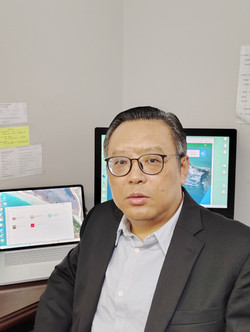
Dr. Li is an Associate Professor at Texas A&M University-Corpus Christi (TAMUCC) and his research interests are in the general areas of computational fluid dynamics (CFD) and turbulence with a focus on modeling and high-fidelity computations of various turbulent flows with and without multiphase transport and chemical reaction. Before joining TAMUCC, he had been a research associate at the Los Alamos National Laboratory (LANL) and Michigan State University (MSU). He received his PhD degree from Michigan State University at 2008 and received his M.S. and B. S. degree from Beijing University of Aeronautics & Astronautics at 2002 and 1999, respectively.
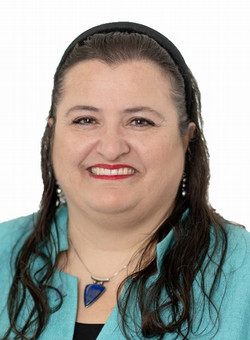

Dr. Jian Sheng is a Professor of Engineering at Texas A&M University-Corpus Christi in Texas, USA, where he works in engineering and applied research. He has a significant body of work in biofluid dynamics, microfluidics, biofilms, and experimental fluid mechanics, research areas that combine fluid flow behavior with biological and environmental systems.
Dr. Sheng’s publications include interdisciplinary studies such as the hydrodynamics of oil droplets interacting with microbial extracellular substances using microfluidic platforms, work relevant to understanding microbial processes in complex fluid environments. He has co-authored research on advanced imaging techniques and microfluidics to analyze bacterial motion and surface interactions.
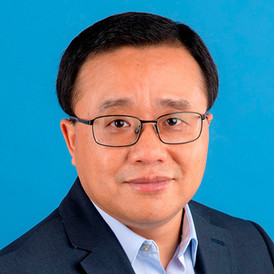
Dr. Hua Zhang received his B.S. and M.S. degrees from Hunan University and his Ph.D. degree from University of Regina, all in environmental engineering. Before joining TAMU-CC, he was a postdoctoral scholar at Stanford University. His research interests include hydrology, water resources, geospatial analysis, infrastructure resilience, and environmental systems analysis. For information on his research group - Water and Environmental Systems Analysis Lab (WESA), please visit WESA.