Speakers

Mini Das
Moores Professor of Physics, Biomedical Engineering and Electrical Engineering at the University of Houston (UH)
Mini Das is Moores Professor of Physics, Biomedical Engineering and Electrical Engineering at the University of Houston (UH). Her research interests span areas of applied and optical physics, optical engineering, inverse problems, advanced detectors, biomedical imaging, image science and psychophysics. She is a recipient of the National Institute of Health (NIH) K25 Career Development Award, the DOD Congressionally Directed Medical Research Programs (CDMRP) Breakthrough Award, the National Science Foundation CAREER Award, UH Award for Excellence in Research and Scholarship, and the UH Advance Fellowship. She was selected as one of the SCIALOG Fellows for advancing bioimaging by the Research Corporation for Science Advancements. A Fellow of the International Society of Optics and Photonics (SPIE) since 2022, and a Fellow of the International Optical Society (Optica) since 2026, she is keen to develop educational and outreach activities to advance and promote interdisciplinary research. In addition, she is passionate about interdisciplinary research for societal benefits such as wide-spread accessibility to novel low-cost imaging systems.
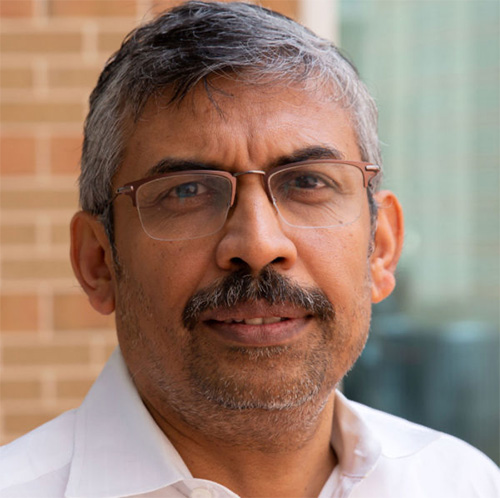
Bhaskar Dutta
Professor, Mitchell/Heep Chair of High Energy Physics, Director, Mitchell Institute for Fundamental Physics and Astronomy, Department of Physics and Astronomy, Texas A& M University
Professor Bhaskar Dutta, an expert in theoretical high-energy, and a fellow of the American Physical Society is recognized “for outstanding and original contributions to the understanding of particle physics phenomenology, in particular dark matter, neutrinos, models and collider physics.” Dutta joined the Texas A&M Department of Physics and Astronomy in 2005 as an associate professor, earning promotion to full professor in 2009, and was appointed the Mitchell-Heep Chair of High Energy Physics in 2019. He received his Ph.D. from Oklahoma State University in 1995 and completed postdoctoral study at the University of Oregon (1995-1998) and Texas A&M (1998-2002) before beginning his independent academic career as an assistant professor at the University of Regina in Canada (2002-2005). In 2017, he was honored with the Distinguished Alumni Award from Oklahoma State University. Dutta is considered one of the most prolific theorists of his generation, given his distinguished record of research in high energy physics with highly cited publications in top journals, fundings and many invited plenary talks at major international conferences.
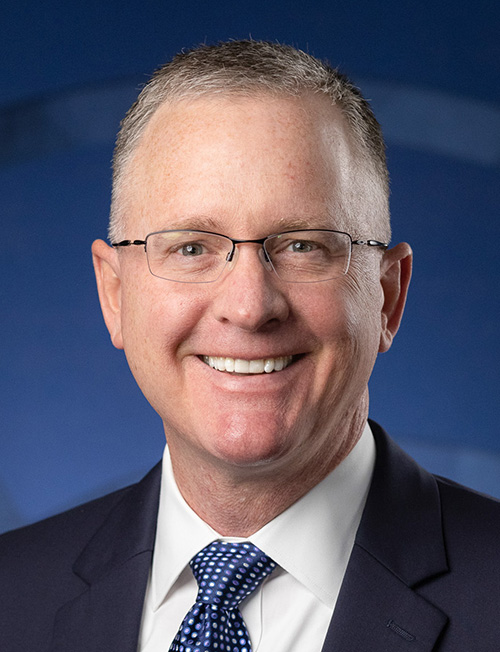
Mike Headley
Executive Director of the South Dakota Science and Technology Authority and the Laboratory Director of the Sanford Underground Research Facility (SURF)
Mike Headley is the Executive Director of the South Dakota Science and Technology Authority and the Laboratory Director of the Sanford Underground Research Facility (SURF) in Lead, SD.
Over the past 18 years, his leadership established SURF as America’s underground lab, hosting world-class science, engineering, and education. SURF is home to the Deep Underground Neutrino Experiment, the largest experiment ever undertaken on American soil.
Mike earned a computer science degree from South Dakota State University (SDSU) in 1992. After graduation, he served six years in the U.S. Air Force and was awarded the Defense Meritorious Service Medal for directing a 200-member team at the National Reconnaissance Office that oversaw satellite intelligence systems.
In 1998, Mike joined the Earth Resources Observation and Science (EROS) Center near Garretson, SD. At EROS, he managed a $280 million budget and led a 120-member team to build the next-generation Landsat satellite mission. He then joined the SDSTA at SURF in 2008.
Mike has an MBA from Loyola Marymount University in Los Angeles. The SDSU College of Engineering named him a Distinguished Engineer in 2024. Mike also received an honorary doctorate in science from SDSU in 2026.
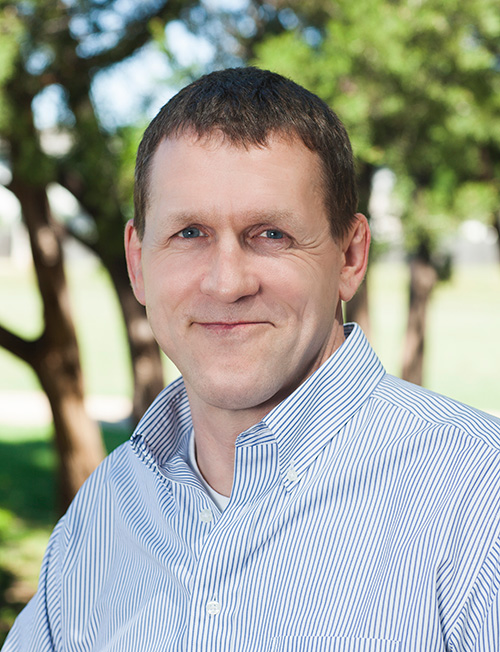
Dale Harrison
Co-founder and CTO of VUV Analytics
Dale Harrison is a co-founder and CTO of VUV Analytics, where he leads the development of vacuum ultraviolet (VUV) optical technologies for analytical instrumentation. He has over 30 years of experience in optical spectroscopy, with more than two decades focused on the design and development of optical systems employing VUV light. Dale holds more than 40 U.S. patents and has authored numerous technical publications. Prior to founding VUV Analytics, he was co-founder and CTO of Metrosol, a start-up that brought VUV metrology instruments to market for the semiconductor industry. He holds a Ph.D. in experimental condensed matter physics from Simon Fraser University.
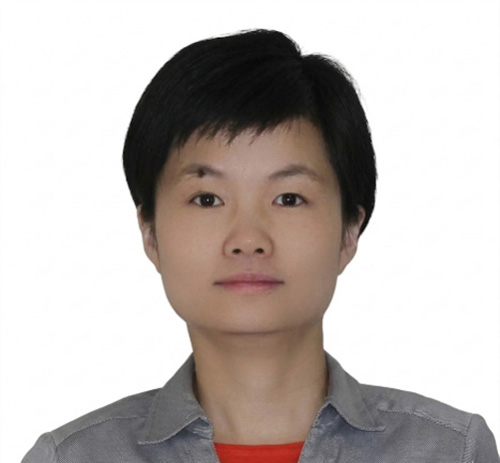
Qiuzi Li
Engineering and Computational Physics Manager at ExxonMobil
Qiuzi’s academic and professional journey spans theoretical physics, applied research, and strategic leadership. She earned her Bachelor of Science in Physics from Zhejiang University (China) in 2008 and completed her Ph.D. in Theoretical Condensed Matter Physics at the University of Maryland, College Park in 2013. Her doctoral research encompassed four diverse and cutting-edge areas: electronic transport in disordered mesoscopic systems (with a primary focus on graphene), quantum computation, three-dimensional topological insulators, and cold dipolar molecules.
In 2013, Qiuzi joined ExxonMobil Research and Engineering – Corporate Strategic Research, where she has led and contributed to multidisciplinary research at the intersection of geoscience and materials science. Collaborating with experts across theoretical and experimental physics, computational science, and materials science, she has driven innovation in several domains. Notably, she invented a magneto-seismic method for hydrocarbon detection and developed a foundational theoretical framework for the induced polarization exploration technique. From 2022 to 2024, she served as a technical advisor to the Vice President of ExxonMobil Low Carbon Solutions Technology. She served as a Business Development Advisor at ExxonMobil Product Solutions from 2024 to November 2025. Qiuzi is currently the Engineering and Computational Physics Manager, where she builds and mentors high-performing teams, sets technical direction and performance goals, and drives professional development. She also defines and executes technical strategy aligned with business priorities, translating physics-based insights into scalable solutions that accelerate innovation across the energy industry.
Beyond her technical achievements, Qiuzi is a committed advocate for diversity, equity, and inclusion in science and engineering. She currently serves on the Awards Committee of the Society of Women Engineers and previously served on the Committee on the Status of Women in Physics of the American Physical Society. She is also actively engaged in STEM education and outreach, participating in initiatives such as “Introduce a Girl to Science & Engineering” and Kid’s Day at the Red Mill Museum in Clinton, NJ. Within ExxonMobil, she has held leadership roles including Chair of the New Professionals Program and President of the Asian Connection for Excellence, an Employee Resource Group.
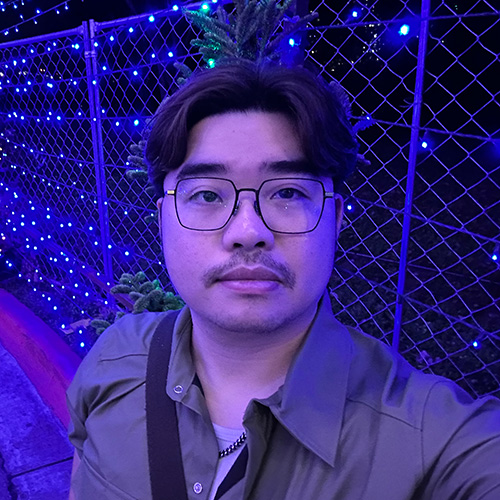
Linh Nguyen
Scientist, Focused Energy
My name is Khanh Linh Nguyen. I'm a Laser-Plasma Scientist at Focused Energy, a US-German startup pioneering laser-driven inertial fusion energy. I study theoretical and computational laser-plasma physics, using large-scale simulations on high-performance computing (HPC) systems. I earned my PhD at the University of Rochester. As a graduate research assistant, I worked both at the Laboratory for Laser Energetics (LLE) and at Los Alamos National Laboratory (LANL). After years of academic and national-lab research, I moved into the fast-growing private fusion industry. I still bring the same scientific depth to my work, but now it has to meet engineering milestones and commercial timelines.
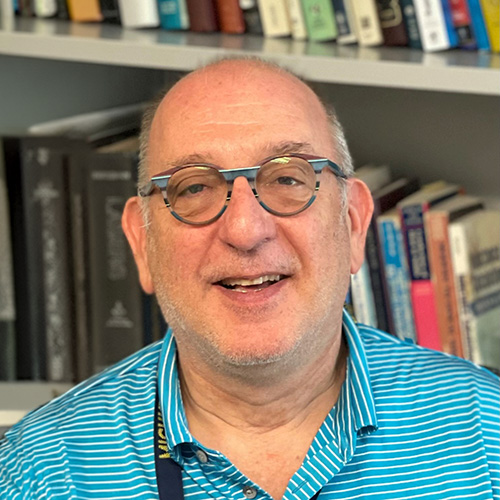
Peter Ventzek
Senior Manager, Tokyo Electron America
Peter Ventzek manages the Concept and Feasibility Lab (CFL) at Tokyo Electron America, Inc. in Austin Texas where he is also a Fellow. He is an AVS Fellow and recipient of the 2013 AVS Plasma Prize. Active in various societies and international conferences, Peter has served as chair of AVS Plasma Science and Technology Division and the Gaseous Electronics Conference. In addition to having held various research and management positions throughout the industry, he was a member of faculty at Hokkaido University and Keio University in Japan. Peter is an author of over 100 refereed scholarly publications and has over 100 granted US patents. His recent research interests include the advancement of fundamental plasma process science through the use of first principles based simulation methods for A7 and beyond semiconductor device fabrication.
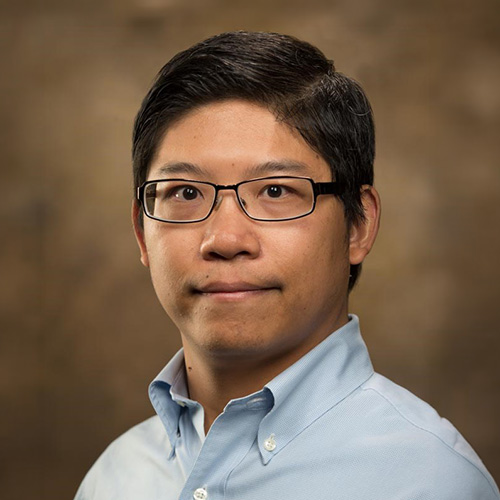
Yong Wang
Associate Professor in the Department of Physics at the University of Arkansas
Dr. Yong Wang is an Associate Professor in the Department of Physics at the University of Arkansas, with affiliations in the Cell and Molecular Biology Program and the Materials Science and Engineering Program. He received his Ph.D. degree in Physics from the University of California Los Angeles, and conducted postdoctoral research at the University of Illinois Urbana-Champaign and the University of Toronto before joining the University of Arkansas in 2016. Dr. Wang’s research group works at the interface of physics, nanotechnology, materials science, and biology. His lab develops and applies quantitative fluorescence microscopy, single-molecule techniques, and computational approaches to investigate the physical mechanisms underlying biological motion, molecular diffusion, and interactions. His recent work focuses on the diffusion dynamics of individual proteins in living bacteria under environmental stress, as well as bacterial motility and flagellar dynamics in complex environments (e.g., polymer networks and porous media).