Texas A&M-Corpus Christi Launches First Engineering Ph.D. Program
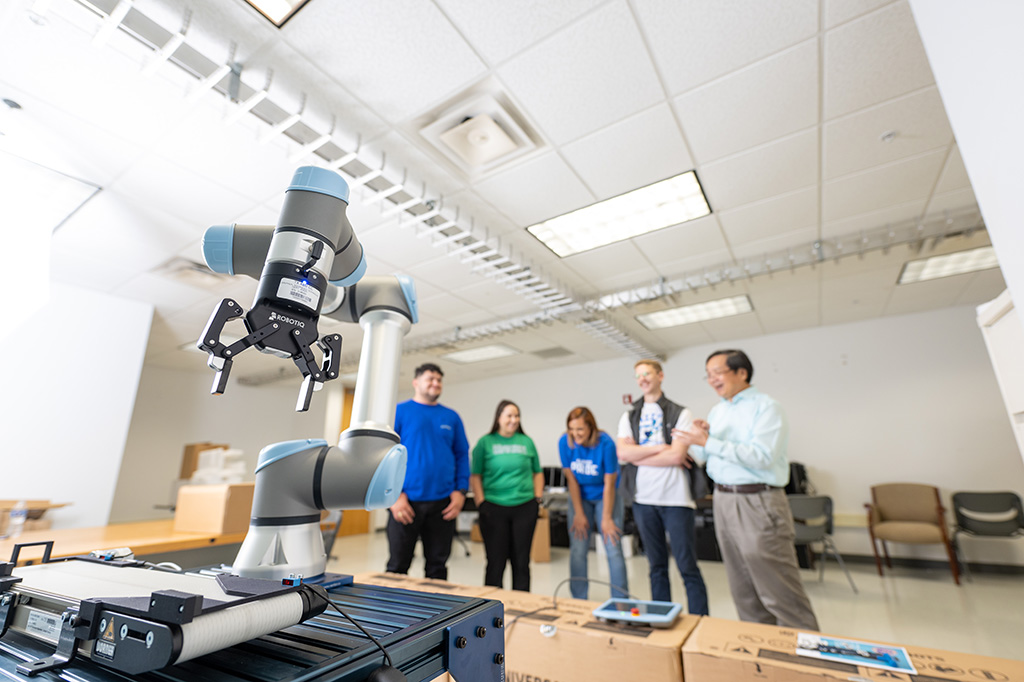
Texas A&M University-Corpus Christi is taking a bold step toward becoming a premier destination for engineering research and innovation with plans to launch its first-ever Doctor of Philosophy in Engineering.
Following approval by the Texas Higher Education Coordinating Board in April 2026, the university expects to welcome its inaugural doctoral class in fall 2026. The new program represents a significant milestone for the Island University, expanding opportunities for students while strengthening the university’s ability to attract competitive research funding, supporting faculty-led innovation, and developing the highly skilled engineering workforce Texas industries increasingly demand.
“This approval represented years of vision, planning and hard work by our faculty, staff, and university leadership,” said Dr. David Ma, Dean of the College of Engineering and Computer Science.
The new Ph.D. arrives at a pivotal moment for the university as TAMU-CC continues to build on major research-growth advances tied to research expenditures, doctoral education, Texas University Fund capacity, and its long-term Research 1 (R1) trajectory. The program also enhances the university’s competitiveness for larger federal and industry grants while increasing graduate student involvement in sponsored research.
“The Ph.D. program is a game changer, not just for our university, but for the entire region,” Ma said. “It positions us to produce graduates who will lead in solving real-world problems through interdisciplinary research and hands-on innovation with a focus that directly impacts South Texas and the Gulf Coast.”
Doctoral students will conduct research in areas including sustainable energy technologies, such as small modular nuclear reactors, carbon capture and sequestration, and next-generation manufacturing systems. They will also explore the rapidly expanding role of artificial intelligence in solving coastal challenges by developing AI-driven technologies for environmental monitoring, port operations, and resilient infrastructure.
The Ph.D. program is a game changer, not just for our university, but for the entire region. It positions us to produce graduates who will lead in solving real-world problems through interdisciplinary research and hands-on innovation with a focus that directly impacts South Texas and the Gulf Coast.”
Dr. David Ma, Dean of the College of Engineering and Computer Science
Students will also have access to Texas A&M-Corpus Christi’s nationally recognized drone and autonomous systems programs, allowing them to work at the intersection of robotics, data analytics, critical infrastructure, and coastal resilience.
The program will offer four specialized concentration areas: civil and environmental engineering, electrical and advanced manufacturing engineering, industrial and process engineering, and mechanical and energy engineering.
Through a combination of advanced coursework, interdisciplinary research, and faculty mentorship, students will develop the technical expertise and leadership skills needed for careers in industry, government laboratories, and academia.
“This new degree is a strategic investment in the future of South Texas,” said Kelly M. Miller, Ph.D., President and CEO of Texas A&M University-Corpus Christi. “We are empowering students, advancing knowledge, and driving economic growth across the region.”
The doctoral program directly supports the strategic priorities of the Texas A&M University System by expanding graduate education, strengthening research, and addressing Texas’ growing workforce needs.
Texas continues to experience increasing demand for engineers with doctoral-level expertise as industries invest in semiconductor manufacturing, advanced manufacturing, renewable energy, artificial intelligence, and smart technologies. Federal initiatives, including the CHIPS and Science Act, are accelerating this demand by creating new opportunities for engineering research and innovation.
Students will gain valuable professional experience through interdisciplinary research projects, partnerships with nationally recognized research institutes, and internships with corporate partners. The program will also leverage National Science Foundation support through the university’s Industry-University Cooperative Research Center, which provides funded graduate summer internships and research opportunities.
“I anticipate that the first Ph.D. graduates could cross the stage as early as spring 2031,” Ma said. “Personally, it will be deeply meaningful to see the program move from an idea to an approved degree and ultimately to graduates who are contributing new knowledge to the field.”
The announcement comes as the College of Engineering and Computer Science celebrates another significant achievement: six-year accreditation from ABET for all four of its engineering programs — civil, electrical, industrial, and mechanical engineering — as well as its geographic information science program.
“To receive ABET’s best possible outcome across all programs — especially for two brand-new programs, civil engineering and industrial engineering — is incredibly rare,” Ma said.
ABET, the Accreditation Board for Engineering and Technology, is the global standard for quality assurance in engineering education. Its rigorous peer-review process confirms that academic programs meet the highest standards established by the engineering profession and prepare graduates for professional licensure and successful careers.
“ABET accreditation tells students and employers that we meet or exceed the highest standards in the field and adds tremendous value to our degrees,” Ma said. “These accomplishments are a testament to the vision, dedication, and expertise of our faculty and staff — and to the extraordinary potential of our students.”