Earn Your Master's Degree in Marine Biology
At Texas A&M University-Corpus Christi, marine biology students learn from internationally recognized faculty and gain hands-on research experience in one of North America's most distinctive coastal environments. Through advanced coursework, field experiences, and original research, students develop the knowledge, technical skills, and scientific expertise needed to make meaningful contributions to marine science and build successful careers in the field.
Program Details
The Master of Science in Marine Biology is a research-focused graduate program for students who want to deepen their understanding of marine organisms—including their physiology and evolution, as well as the ecosystems they inhabit—explore applied fields such as conservation, fisheries and biotechnology, and help advance marine biological research. Through advanced coursework, laboratory experiences, field studies and independent research, students examine the complex challenges facing marine organisms and ecosystems while developing the skills needed for careers in research, conservation, government, education and industry.
Most students complete the program in approximately two years while working closely with faculty mentors on original research projects. Students have access to specialized laboratories, biological analytical facilities, marine population and ecosystem observation technologies, and research vessels that support wetland, coastal, and offshore studies. Located on its own island campus along the Texas coast, Texas A&M University-Corpus Christi provides direct access to diverse and unique marine and coastal ecosystems, creating exceptional opportunities for scientific discovery and hands-on learning.
Researchers in Action
TAMU-CC's Marine Biology faculty and student researchers investigate topics spanning botany and phycology, microbiology, molecular, cellular, organismal and population biology, fisheries biology, aquaculture and mariculture, microbial interactions and microbiomes, anatomy, physiology, behavior, genetics, evolution, and marine and wetland ecology.
What You'll Learn
The Marine Biology, MS combines advanced coursework with faculty-mentored research to prepare students for professional and scientific careers in marine biology. Coursework and research experiences emphasize:
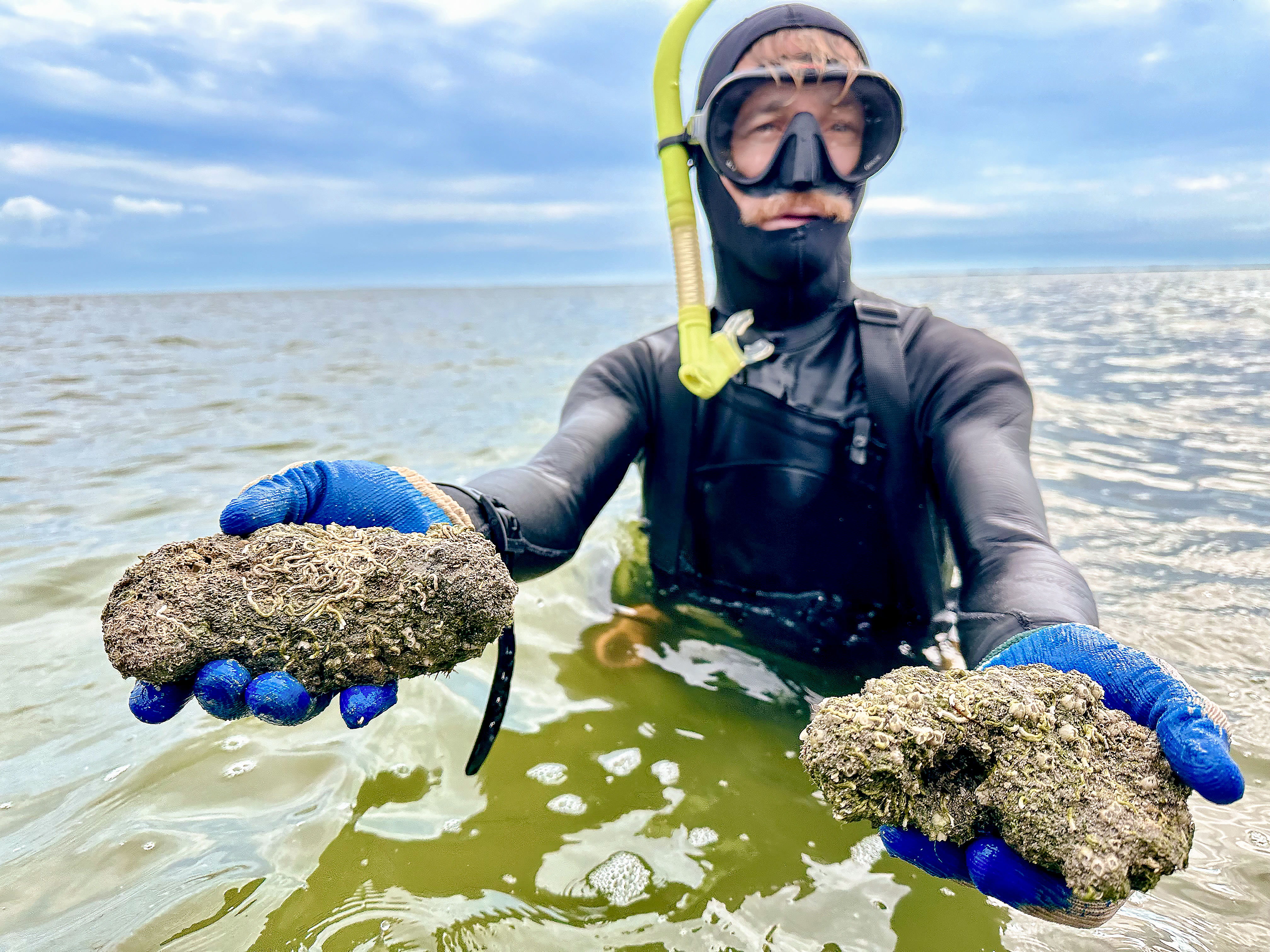
- Marine biology comprises multiple biological disciplines: ecology, zoology, botany/phycology, microbiology, physiology, genetics and molecular biology, evolution and systematics, behavior and interaction
- Experimental design and hypothesis-driven research
- Statistical and computational analysis
- Marine field techniques and laboratory methods
- Data collection, management, and interpretation
- Scientific writing and communication
- Research ethics, data transparency, and reproducibility
- Interdisciplinary collaboration and problem-solving
- Professional presentation of scientific findings
Throughout the program, students design and conduct original research while developing the analytical, technical and communication skills needed to advance the study of marine biology, evolution and adaptation of marine organisms, marine ecology, marine habitats, and interdisciplinary areas such as fisheries biology, aquaculture and mariculture, conservation, biotechnology, physiology, toxicology, pathology and disease ecology.
When you are ready, reach out.
Have questions? We're here to help. Whether you're exploring the program or ready to apply, our faculty is happy to guide you every step of the way.

Visit Us
If you'd like to see more of TAMU-CC, enjoy our immersive 360° virtual tour or schedule an in-person visit.