TAMU-CC Researcher to be Part of $30M NSF-Funded Turbulence Research Center in Collaboration with Michigan State University
TAMU-CC Researcher Dr. Zhaorui Li will be part of the team.
The research will center on understanding and controlling turbulence, with potential breakthroughs in fusion energy, hypersonic flight, and other complex scientific challenges.
CORPUS CHRISTI, Texas – Michigan State University has received a $30 million grant from the National Science Foundation, beginning Sept. 1, to establish a new Science and Technology Center, or STC, focused on one of science’s most difficult problems: understanding and controlling turbulence which has applications including fusion energy, astrophysics, and hypersonic flight.
The Science and Technology Center for Transformative Explorations in Multi-Physics and Engineering of Scientific Turbulence, or TEMPEST, will bring together physicists, mathematicians, engineers, and artificial intelligence researchers from across the country to advance the ability to understand, predict, and ultimately control turbulence — the chaotic, swirling motion found in air, water, plasma, and other fluids.
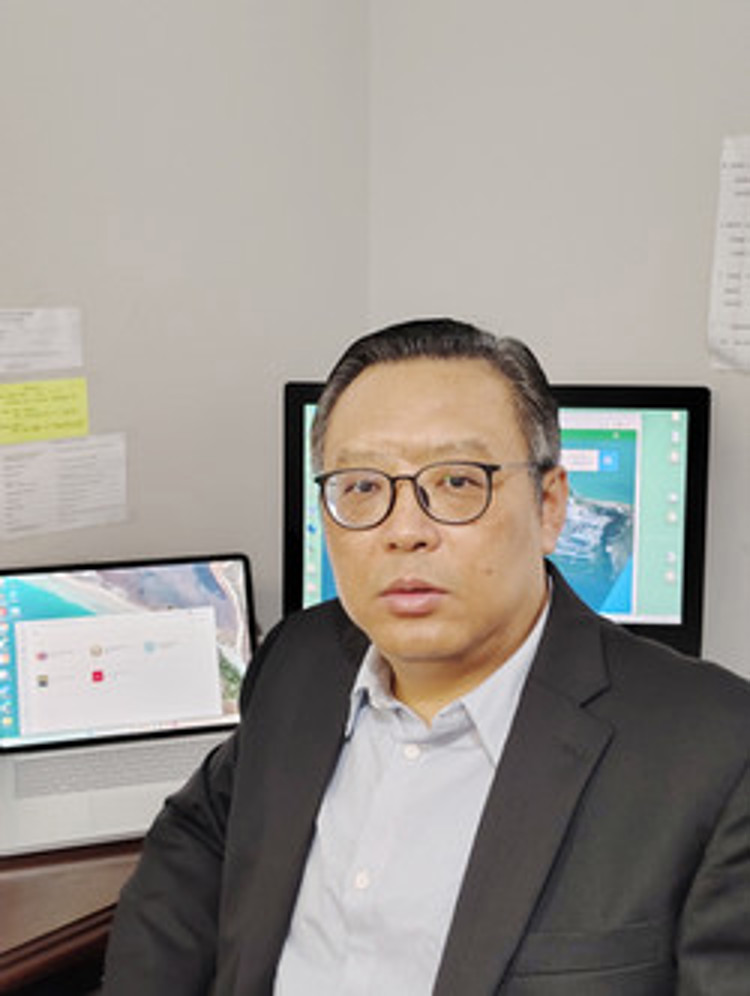
Among the researchers contributing to this national effort is Dr. Zhaorui Li of Texas A&M University-Corpus Christi. His work is part of TEMPEST’s larger interdisciplinary effort to better understand turbulent flows across a wide range of physical environments and scales. His involvement also highlights the center’s commitment to bringing together researchers from diverse institutions and disciplines to address a problem that cannot be solved through any single field of science.
“Turbulence is all around us — in the air we breathe, the water we drink, the storms moving across the atmosphere, and the plasmas inside experimental fusion devices,” said Dr. Zhaorui Li, Associate Professor in the College of Engineering and Computer Science. “Understanding turbulence is essential to understanding how energy and matter move through the natural and engineered world. TEMPEST gives us an unprecedented opportunity to bring together researchers with complementary expertise to tackle this challenge.”
A better understanding of turbulence — from tiny, microscopic interactions to massive atmospheric jet streams — could help researchers around the world address challenges in science and engineering.
The NSF TEMPEST award supports students and researchers at Michigan State University, Auburn University, Baylor University, Georgia Institute of Technology, San José State University, Texas A&M University-Corpus Christi, University of Rochester, and Yale University to combine theory, computation, AI techniques, and experimentation to build trustworthy predictive models of real-world turbulence for high consequence applications. Additional partners include Los Alamos National Laboratory, Sandia National Laboratories, Lawrence Livermore National Laboratory, Pacific Fusion and General Atomics.
Dr. Li’s participation helps extend this collaborative research network to Texas A&M University-Corpus Christi, strengthening connections between cutting-edge turbulence research and the scientific challenges associated with inertial confinement fusion (ICF), hypersonic flight, and other complex systems. Through his work on the project, Li will contribute to the center’s goal of developing more accurate and predictive approaches for understanding turbulent flows in extreme environments.
The breadth of the TEMPEST team is central to its mission. Researchers such as Li, working alongside scientists and engineers across the participating institutions, will help connect fundamental theories and computational models with observations and experiments. This approach is designed to move researchers beyond simply explaining why turbulence behaves as it does toward predicting how it will behave — and ultimately controlling it.
Using theory, computation, experimentation, and artificial intelligence in concert, TEMPEST researchers will test new ideas against real-world observations and use those results to refine predictive models. The interdisciplinary approach will help create tools that can be applied across scientific disciplines and to some of the most challenging problems facing society.
The center will make its data and software broadly available and engage the public through museum exhibitions, immersive media, and educational programs that are expected to reach more than 10,000 K-12 students annually. TEMPEST will also help train an AI-fluent scientific workforce prepared to tackle complex problems across disciplines.
For Texas A&M University-Corpus Christi, participation in TEMPEST provides an opportunity for faculty and students to contribute to a major national research initiative while expanding collaborative opportunities with leading researchers at universities across the country.
“Dr. Li brings important expertise and perspective to this ambitious national research effort,” said Dr. Ahmed Mahdy, Executive Vice President for Research and Innovation at TAMU-CC. “His involvement in TEMPEST demonstrates the caliber of research taking place at Texas A&M University-Corpus Christi and the important role our faculty can play in addressing complex scientific challenges alongside leading researchers from across the country.”
The TEMPEST STC will be housed in the Engineering Building on the MSU campus until MSU’s new Leinweber Center for Engineering and Digital Innovation opens in 2028.
This is archived content and was published before April 26, 2027. While we are committed to making our digital spaces accessible to everyone, some parts of this archived content may not fully comply with WCAG 2.1 Level AA standards.
If you require a specific news article in an accessible format, please contact us at webhelp@tamucc.edu. We will work to provide the content to you in an accessible format within five working days.