TAMU-CC Earns National Recognition for Preparing the Next Generation of Surveyors


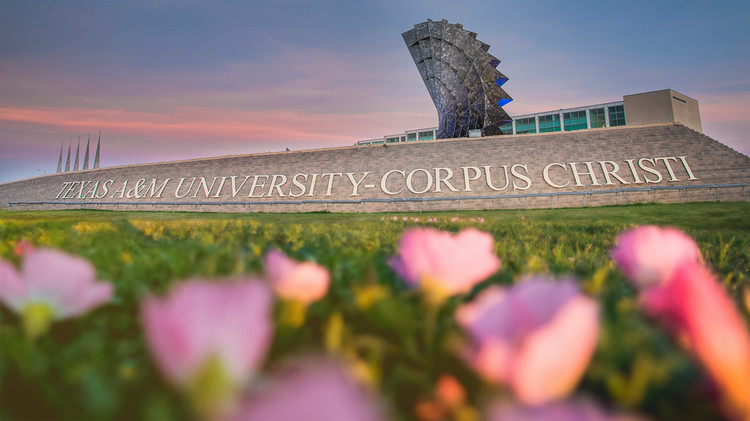
CORPUS CHRISTI, Texas – Texas A&M University-Corpus Christi has received national recognition for preparing the next generation of surveyors, earning the top award in the four-year program category of the 2026 National Council of Examiners for Engineering and Surveying (NCEES) Surveying Education Award.
The university’s geospatial science program, within the College of Engineering and Computer Science, received the $25,000 grand prize, which recognizes surveying programs that advance the profession and strengthen the pipeline of future licensed surveyors. Judges recognized a geospatial science program that has spent more than three decades preparing students for careers in surveying, mapping and geospatial science, naming its Geospatial Engineering and Land Surveying Career and Technical Education (GELS) Pathway, a career and technical education program for high school students, as the competition’s most transformational and replicable model.
“This award reflects the strength of the entire program,” said Seneca Holland, Geospatial Science Program Coordinator. “We’ve been educating surveyors since the 1990s, and our graduates now serve in leadership positions at surveying, geomatics, and engineering firms across Texas and the country. The GELS pathway is one part of that story.”
TAMU-CC’s Geospatial Science program is Texas’ only four-year ABET-accredited land surveying program. Students pursuing a Bachelor of Science in Geospatial Science can do so either on campus or fully online. For students with degrees in other fields, the program also offers a Post-Baccalaureate Certificate in Geomatics. Students gain practical experience throughout the program, working alongside faculty, researchers, and industry professionals on projects that connect classroom learning with professional practice.
Doctoral candidate José Pilartes-Congo ’20, ’22, ’26, an international student from Angola, a country on the western coast of Southern Africa, has been with the university’s geospatial program since 2015. His undergraduate internship was with S&V Surveying, in Spring, Texas, where he worked alongside Islander alumnus Isidro X. Garza ’00. Years later, Garza, now founder and president of Gratia Geomatics, remains a mentor.
“I know I can pick up the phone and ask for help,” said Pilartes-Congo, who is pursuing his Ph.D. in Geospatial Computer Science after earning Bachelor of Science in Geographic Information Systems and Master of Science in Geospatial Systems Engineering degrees from TAMU-CC. “It’s a small community, and everybody is willing to help each other.”
Those relationships, combined with growing demand for licensed surveyors, help reinforce students’ confidence in the profession.
“Even with the greatest technologies coming out, there’s still the need for people to go out into the field, collect the data, and know what to do with it,” Pilartes-Congo said. “Surveying has evolved, but the theoretical foundations are still a core component of what we do. That’s why the continued investment in future professionals is so important.”
That philosophy shapes students’ experiences from the beginning of the program. Many work alongside researchers at the university’s Conrad Blucher Institute for Surveying and Science (CBI), where students collaborate on projects supporting transportation, coastal resilience, and environmental monitoring.
“Our profession is grounded in tradition and measurement science, but it’s also informed by cutting-edge technology,” Holland said. “Surveying has continually evolved by adopting new technologies while remaining grounded in the principles of accurate measurement, critical thinking, and professional judgement.”
Nearly half of CBI employees are students, including Pilartes-Congo. Among the projects he’s worked on was a partnership with the Texas Department of Transportation to evaluate drone-based photogrammetry — the science of obtaining accurate measurements and 3-D models of physical objects and environments from photographs — for transportation infrastructure projects. His work has led to research publications and opportunities to present at conferences in the U.S. and internationally, including in Australia.
“I’ve had the opportunity to work on projects to build the experience I’ll use throughout my career,” Pilartes-Congo said.
Because surveying and geospatial professionals are in such high demand, CBI occasionally offers internship opportunities to incoming students with relevant certifications, technical skills, or a demonstrated interest in field work.
“These early experiences not only help address workforce needs but also strengthen students’ undergraduate education by connecting the practical application of measurement science with the future classroom instruction they will receive once they start classes,” Holland said.
Jack Tunnell ’31, from Port Aransas, is an incoming geospatial science major who is already gaining hands-on experience before his first semester begins. This summer, he is working as a Student Research Assistant at CBI, supporting projects along the Gulf Coast while learning directly from researchers and field technicians.
“This is exactly what I want to do,” Tunnell said. “I hope to get as much experience as I can so that when I graduate, I’ll have the skills and confidence to step right into any position.”
Tunnell joins an incoming class which includes students from the GELS Pathway, which is part of the Islander Academy Dual Credit Program. That program continues to grow, most recently expanding to Corpus Christi ISD’s Foy H. Moody High School.
“Our GELS students immediately see the impact surveyors have on the world around them,” Holland said. “Creating a pathway that introduces students to the profession early and supports them through college and into their careers is what makes this program distinctive, and we are honored that NCEES recognized that work.”
This is archived content and was published before April 26, 2027. While we are committed to making our digital spaces accessible to everyone, some parts of this archived content may not fully comply with WCAG 2.1 Level AA standards.
If you require a specific news article in an accessible format, please contact us at webhelp@tamucc.edu. We will work to provide the content to you in an accessible format within five working days.