Laurie Gómez Martínez: Lived Experience of a Chicana Scholar & Writer
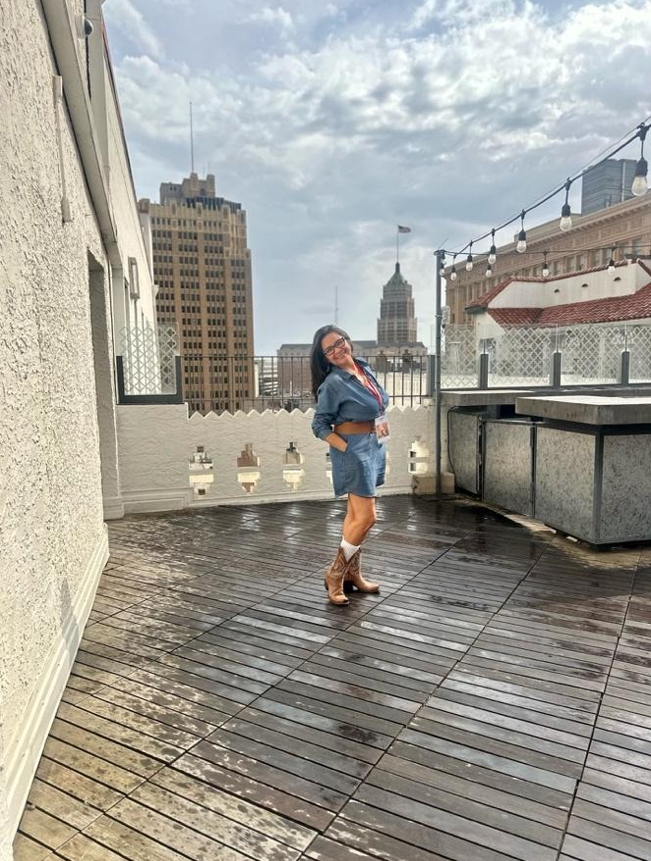
Laurie Gómez Martínez graduated Summa Cum Laude with a Bachelor’s degree in University Studies and a minor in Mexican American Studies from Texas A&M University-Corpus Christi where she is currently pursuing a Master’s in History. Her graduate work focuses on the intersection of Mexican American Studies and Creative Writing, blending historical scholarship with narrative storytelling. She states "My academic journey is a continuous process of discovery that fuels my growth as a Chicana scholar."
Two visitors to the Día de los Muertos festival at the Antonio E. Garcia Arts Education Center, Corpus Christi, TX.
Notes of Praise from Windward Review Editors
The associate editors of the Windward Review discovered sub-themes of empathy for the enemy and humanity during a time of war. The main protagonist, Gómez Martínez’s father, brings to light the ethical gray areas of the Korean war, which captivated our attentions throughout. Laurie Gómez Matínez’s story breaks traditional narrative; beginning at the end, she illustrates individual moments creating an elaborate story. The stakes in this creative non-fiction story are heightened by her ability to implement figurative language and explain character motivations.
Thank you, Laurie Gómez Martínez, for your inspiring story.
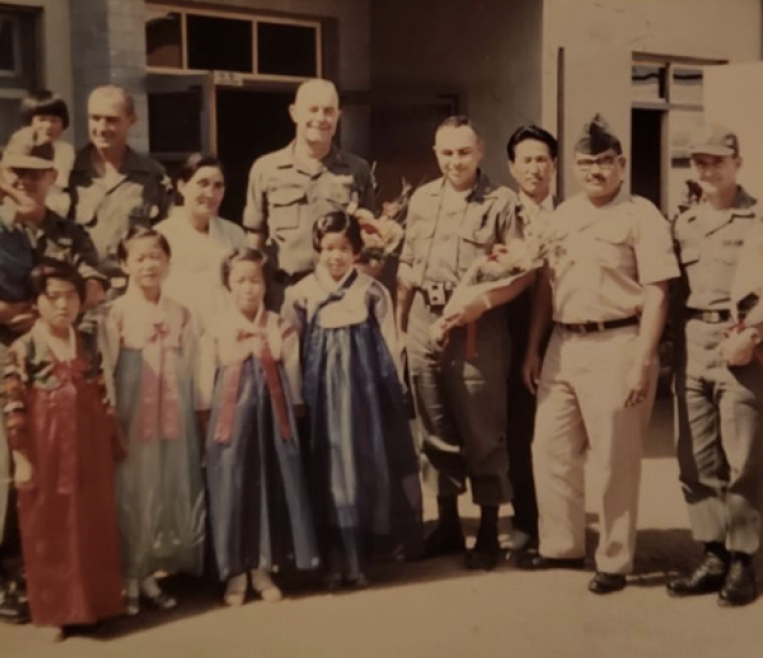
Days in Sang Kwang Orphanage
This featured excerpt from Laurie Gómez Martínez’s short story can be found in the Windward Review Vol. 24 Power, Presence and Perspectives:
“...Then came the downpours, it rained all day and all night for what seemed like forever causing us to trek through trenches of dark mud. We fought for our lives daily. We’d climb the trees when we weren’t in conflict. We’d take our boots and socks off to prevent jungle rot in our feet. The wooded, warm, wet climate invited leeches to feast on our bodies. Like monkeys, we inspected each other’s bodies for leeches and removed them with the glowing tips of cigarettes or joints. Some of the guys did drugs to keep from losing their minds, drugs supplied by the U.S. Army. War is not meant for humans; we killed men, women and children. Their fearful faces forever haunted us in the stillness of the Korean jungle. The wind howled, the shrieks of our buddies echoed through the leaves, they had been captured, some tortured.
The fiery battle went on and on. When we invaded the enemy camps; we took everyone out. No prisoners were taken; orders were followed. We had our share of losses. When the battle subsided, we gathered the red, black and blue bruised bodies of American soldiers, piling them up like a heap of old scraps in a junkyard, to fly them home. There wasn’t much sense in collecting parts, only bodies. The stench of the rotting corpses was thick in the air making us not want to breathe. The body parts became one with the land. Our commander trained us to disconnect from feelings for our own sanity’s sake...”