From Paper to SAIL: The Evolution of Registration Practices at Corpus Christi State University and Texas A&M University-Corpus Christi
By Angelica Santillan
From a transaction to an opportunity
Registration as access
Course registration once required students to travel to campus, move through stations, write checks, and wait while staff entered information into institutional systems. Today, most students select courses through SAIL, but advising deadlines, holds, forms, and staff intervention still shapes access.
This digital exhibit asks how changes in technology and policy altered teh registration experience for students and academic advisors. The evidence shows a long transition rather than a clean replacement of paper by technology. Digital tools increased speed and convenience, while many rules, decisions, and exceptions remained dependent on people.
Historical question
What do surviving registration materials reveal abouat changing approaches to student access, convenience, and institutional responsibility?
The argument
The surviving evidence shows overlapping practices rather than a simple replacement of paper by technology. Extended office hours, computerized records, paper forms, and personal assistanc appear in different combinations. Making registration easier did not necessariry resolve availability or other barriers to an educational plan.
Explore the evidence
Begin with access through office hours, examine proposals for computerization, and compare student reactions with dated registration instructions. Enrollment reporting and a 1994 calendar show the population and procedures these services supported. Screenshots provide a later comparison. The exhibit examines selected historical moments rather than a complete timeline of techbnology launches.
Artifact 1, August 24, 1978
1978 - Registration and Working Students
Making time to enroll
A notice in the Post Aransas South Jetty announced special hours for CCSU involved in enrollment. It connected those arrangements to working people's ability to complete university business. Registration depended on when students could reach the people and offices responsible for the process ("CCSU Holds Registration," 1978).
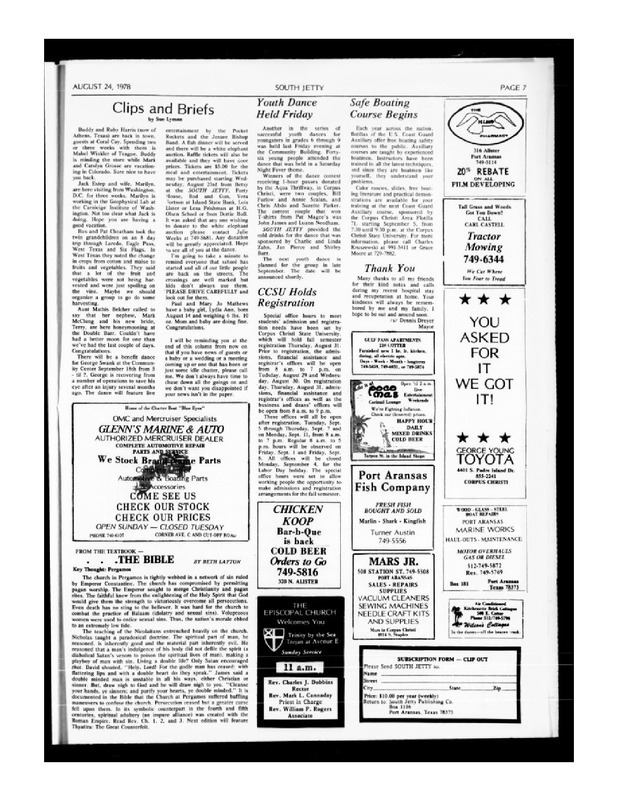
CCSU Holds Registration
Extended hours made registration an issue of access to university services. This announcement records the arrangemet, not its effect in enrollment. Port Aransa South Jetty, August 234, 1978, p. 7. Source: The Portal to Texas History, UNT Libraries.
Why it matters
The announcement makes access concrete. Extending office hours was an organizational response to students whose work schedules with regular service hours. Staff availability mattered before any student could complete an enrollment transaction.
What the sources cannot tell us
This notice records an intended service arrangement. It does not establish how many students used the hours, whether enrollment increased, or whether everyone obtain the courses they needed.
Look closely
Which offices needed to coordinate? What would a working student would still have to do after arriving on campus?