From TASP to TSIA2: The Evolution of College Readiness Testing in Texas
by Julia Valenti-Tontini
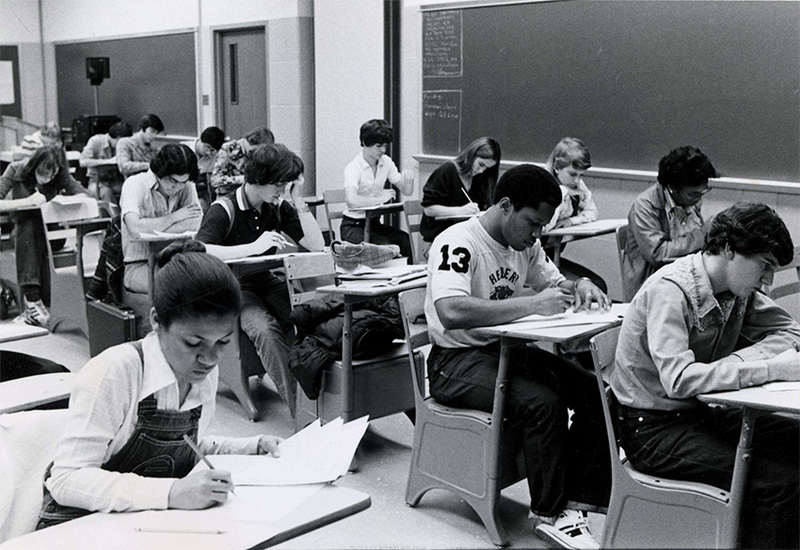
What does it mean for a student to be college ready? Is it the ability to pass a standardized assessment, demonstrate proficiency in mathematics and reading, or successfully complete college-level coursework?
In Texas, the definition of college readiness has evolved considerably over the past several decades. State policymakers, educators, and institutions of higher education have continually worked to determine how students should demonstrate the academic skills necessary to succeed in college. This project examines that evolution, beginning with the introduction of the Texas Academic Skills Program, commonly known as TASP, and continuing through the implementation of the Texas Success Initiative and the more recent TSIA2 assessment.
Defining college readiness: The origins of TASP (1987–1990)
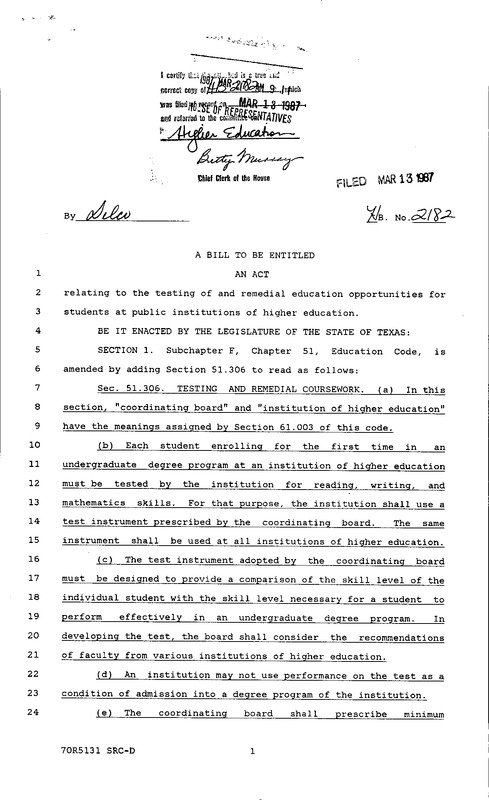
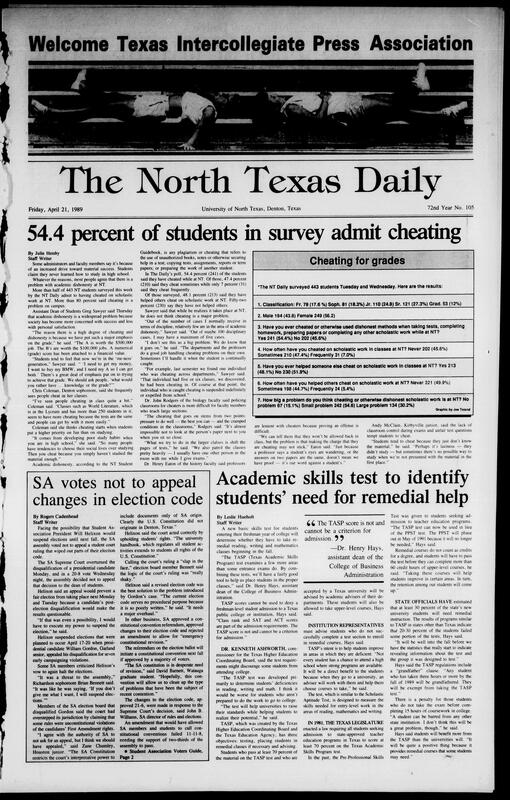
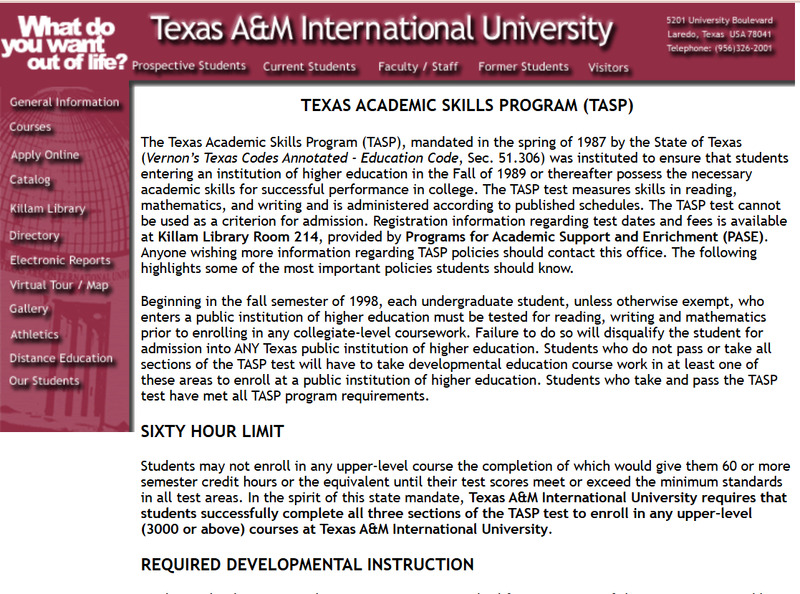
During the late 1980s, Texas began placing greater emphasis on assessing whether students entering public institutions of higher education possessed the academic skills necessary for college-level coursework. The Texas Academic Skills Program (TASP) emerged as a statewide effort to establish consistent academic expectations and identify students who needed additional academic support. Although the legislative foundation for TASP was established in 1987, the program was implemented beginning in Fall 1989. Its primary purpose was to ensure that students entering Texas public colleges and universities demonstrated foundational competencies in reading, writing, and mathematics (Texas Legislature, 1987; Texas A&M International University [TAMIU], 2002).
The passage of House Bill 2182 during the 70th Texas Legislature established the statutory foundation for this initiative through Section 51.306 of the Texas Education Code. The legislation required institutions to assess students' academic skills and provide developmental education for those who did not meet established standards. Importantly, the legislation specified that testing would begin with students entering public institutions no later than Fall 1989 (Texas Legislature, 1987). Rather than functioning solely as an admissions barrier, TASP was designed as an assessment and academic assistance program intended to identify specific academic deficiencies and guide students toward appropriate developmental instruction before completing college-level coursework (Texas Higher Education Coordinating Board [THECB], 1988).
The development of TASP reflected growing concerns about the academic preparedness of students entering higher education. A statewide investigation initiated by the THECB in 1985 resulted in a 1986 committee report identifying deficiencies in students' reading, writing, and mathematical skills. The committee estimated that approximately 30% of entering students lacked one or more of the basic academic competencies necessary for effective college performance. Following these findings, the Coordinating Board recommended a standardized statewide assessment to replace the inconsistent approaches previously used by individual institutions (Texas Higher Education Coordinating Board, 1986; Watkins, 1996).
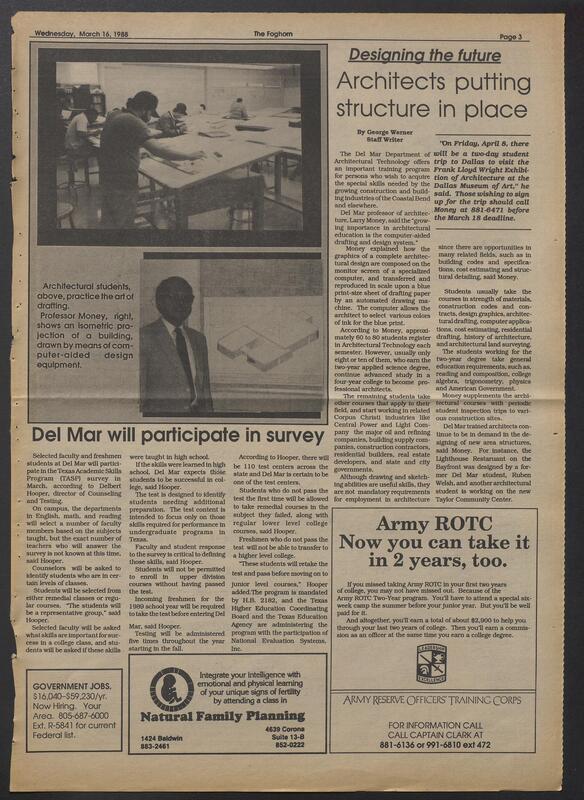
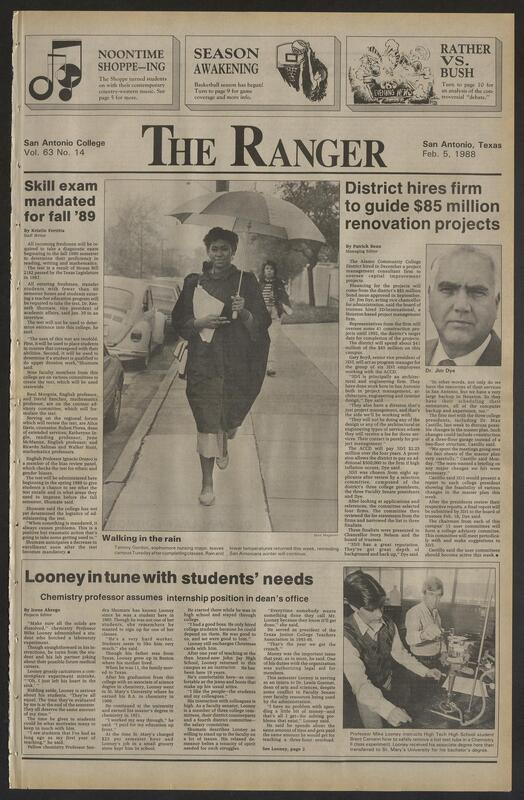
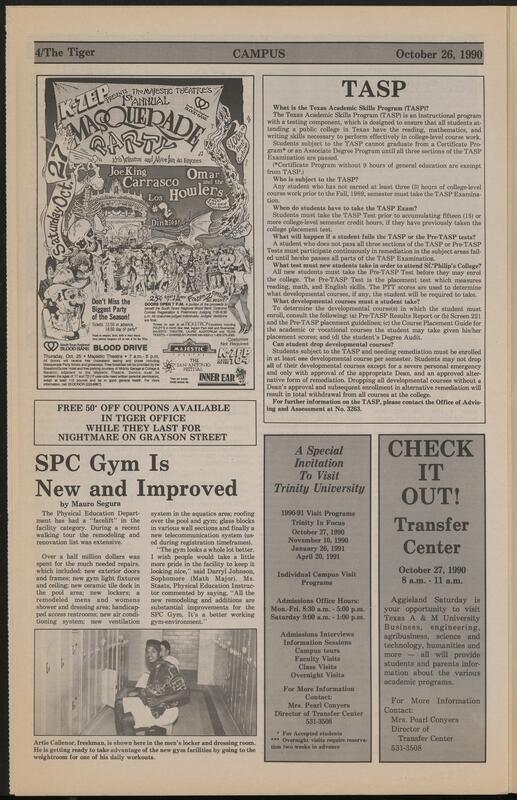
Contemporary newspaper coverage illustrates how these concerns were translated into institutional priorities. In February 1988, The Ranger, the student newspaper of San Antonio College, reported on the approach and efforts the faculty members and institution were going to make to strengthen academic competencies and improve students' reading and writing skills. (The Ranger, 1988). By October 1990, The Tiger, the student newspaper of St. Philip's College, was directly explaining TASP requirements to students, including testing expectations, developmental coursework, and the consequences of failing one or more sections of the examination (The Tiger, 1990). Together, these newspaper accounts demonstrate the transition from institutional concerns about academic preparedness to the implementation of a statewide assessment and remediation system.
1991-1998: TASP and the role of developmental education
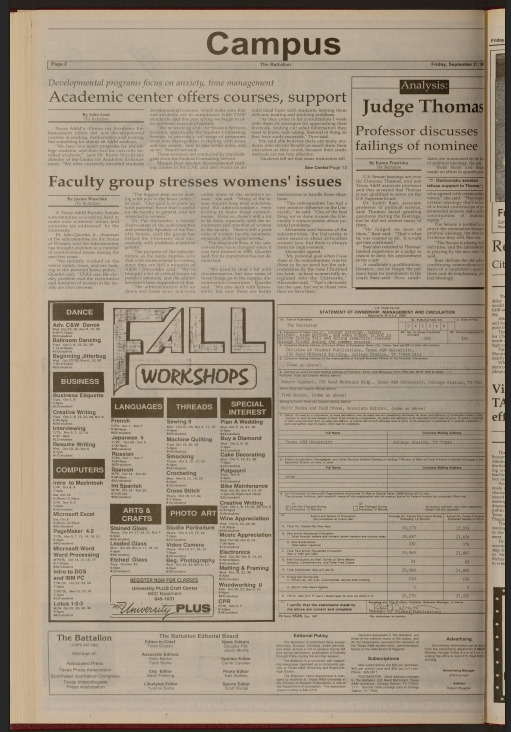
On September 27, 1991, John Lose published an article titled “Developmental Programs Focus on Anxiety, Time Management” in The Battalion, the student newspaper at Texas A&M University. The article provides an important perspective on how college readiness policies were being experienced within an actual university setting. Lose (1991) describes Texas A&M's Center for Academic Enhancement (CAE), which offered developmental courses in reading, mathematics, and writing to help students meet the academic requirements established by the Texas Academic Skills Program (TASP). Beyond traditional academic remediation, the center also provided support programs addressing time management, stress, test anxiety, note-taking, and effective study strategies. One particularly significant aspect of the article is the direct connection between developmental coursework and TASP compliance. Dr. Karon Sturdivant, director of the Center for Academic Enhancement, explained that developmental courses helped currently enrolled students meet TASP standards. The article also describes how academic support personnel worked individually with students to improve reading comprehension, textbook strategies, and study habits (Lose, 1991). This illustrates that the introduction of college readiness testing created a need for institutional support systems. Universities were not simply administering assessments; they were also developing programs to help students address identified academic deficiencies and navigate the expectations of higher education. The article further demonstrates that college success involves more than academic proficiency. Time management, anxiety, test-taking strategies, and the ability to navigate the demands of higher education were recognized as important components of student success. Texas A&M's approach suggests that developmental education was beginning to encompass a broader understanding of student preparedness, incorporating both academic skills and the personal strategies necessary to succeed in college-level environments.
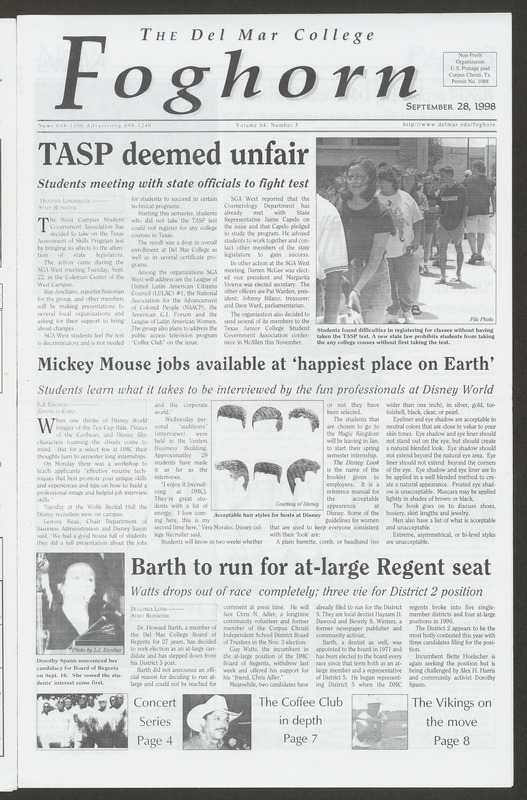
The challenges associated with TASP became even more visible in subsequent years. A September 28, 1998 article in The Del Mar College Foghorn, titled “TASP Deemed Unfair,” illustrates a growing student-centered criticism of the program. Written by Heather Linebarger, the article reports that Del Mar College's West Campus Student Government Association intended to bring concerns about TASP to state legislators. Students argued that the examination was discriminatory and unnecessary for success in certain technical programs. The article also reported that students who had not taken the TASP examination could not register for college courses under the requirements then in effect, contributing to enrollment concerns and difficulties within some certificate programs (Linebarger, 1998).
When considered together, these newspaper articles reveal an important evolution in the relationship between college readiness testing and developmental education. The 1991 article illustrates how universities responded to TASP by creating academic intervention and support programs to help students meet statewide standards. The 1998 article, however, highlights the unintended consequences and perceived inequities associated with those same requirements. While TASP was intended to improve academic preparation and student success, its implementation also raised questions about access, educational opportunity, and whether a single standardized assessment could accurately measure readiness across different academic and technical pathways.
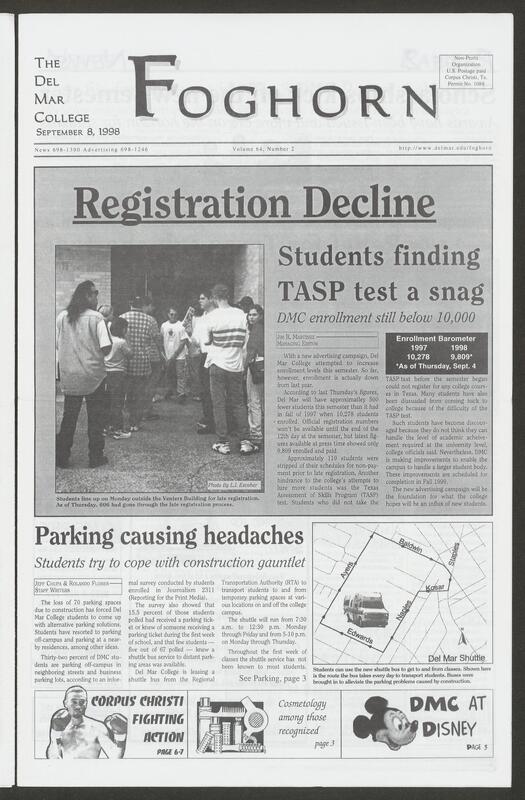
By September 1998, the consequences of the Texas Academic Skills Program were becoming a visible concern at Del Mar College. In this article, The Del Mar College Foghorn reports that enrollment had declined from 10,278 students in Fall 1997 to 9,809 as of September 4, 1998. Among the challenges discussed was TASP, which prevented students who had not completed the required examination before the semester began from registering for college courses. The article also reports that some students had been discouraged from returning to college because of the difficulty of the test.

2003: The transition from TASP to TSI
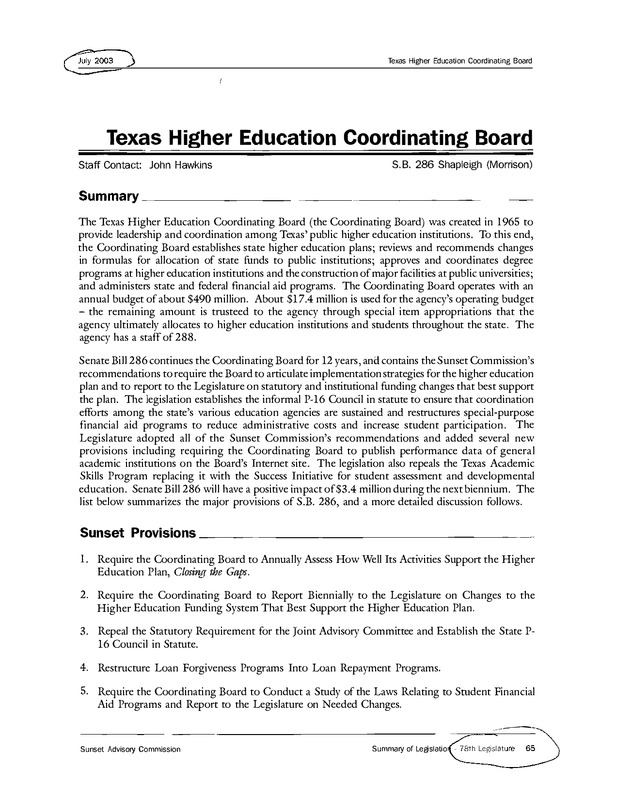
A major turning point in the history of college readiness in Texas occurred in 2003 with the passage of Senate Bill 286 during the 78th Texas Legislature. Effective September 1, 2003, this legislation repealed the Texas Academic Skills Program (TASP) and established the Success Initiative, commonly known as the Texas Success Initiative (TSI) (Texas Legislature, 2003; Texas Association for Institutional Research [TAIR], 2003).
The distinction between the two programs is important. TSI established a broader framework for identifying students who were not yet academically prepared for freshman-level college coursework and determining what support they needed. Under the legislation, public institutions of higher education were required to assess the academic skills of entering undergraduate students, subject to specified exemptions. Importantly, assessment results could not be used as a condition of admission. The legislation also required institutions to establish advising programs and work with students who did not meet established readiness standards to develop individualized plans for achieving college readiness (Texas Legislature, 2003, Section 37).
This represented an important policy development because the state was placing greater responsibility on higher education institutions to help students develop the skills necessary for college success. Unlike the previous TASP framework, which relied heavily on required developmental coursework, the Success Initiative allowed institutions greater flexibility in addressing students' academic deficiencies. Institutions could use developmental coursework when appropriate, but they could also employ other approaches to help students achieve readiness (Leidig, 2003).
The legislation also introduced an accountability component by requiring institutions to report annually to the Texas Higher Education Coordinating Board on student success and the effectiveness of their Success Initiative programs. The Coordinating Board was also required to evaluate the initiative at both the statewide and institutional levels (Texas Legislature, 2003, Section 37). This policy change reflected a growing recognition that identifying academic deficiencies was only one part of the college-readiness process; institutions also needed systems for responding to those deficiencies and evaluating whether their interventions were effective. Nevertheless, the policy continued to rely on assessment benchmarks to evaluate students' readiness for freshman-level academic coursework, maintaining standardized assessment as a central component of Texas college-readiness policy.
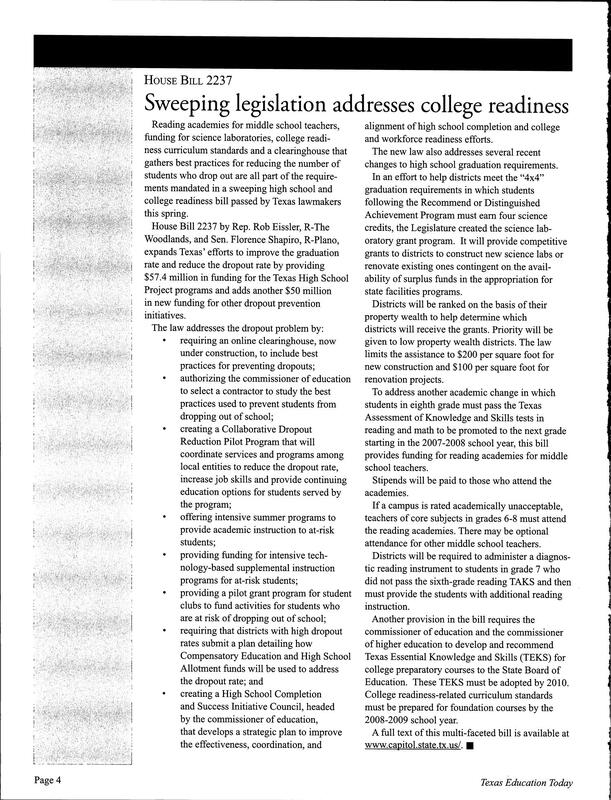
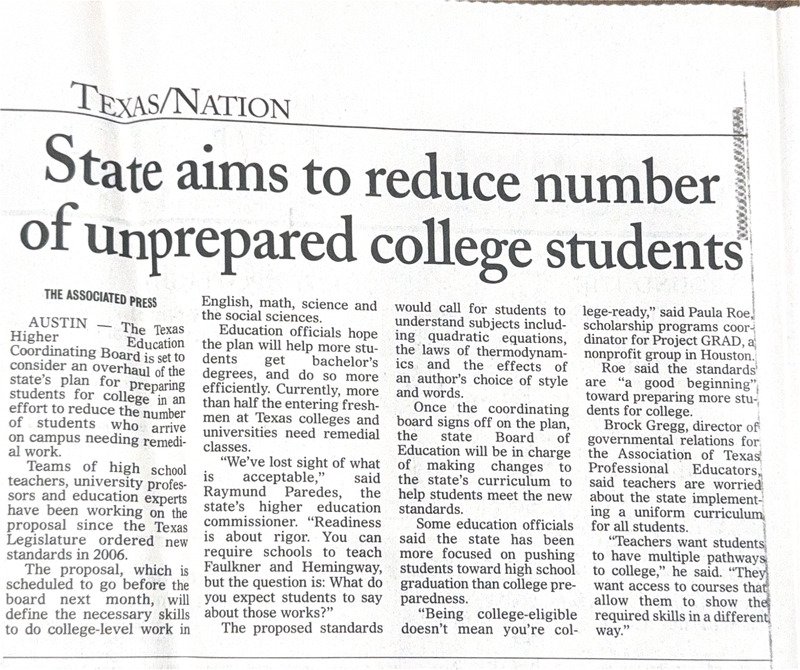
2010: The expansion of dual credit and college access
While Texas was refining its definition of college readiness, another important development was occurring: the expansion of dual-credit programs.
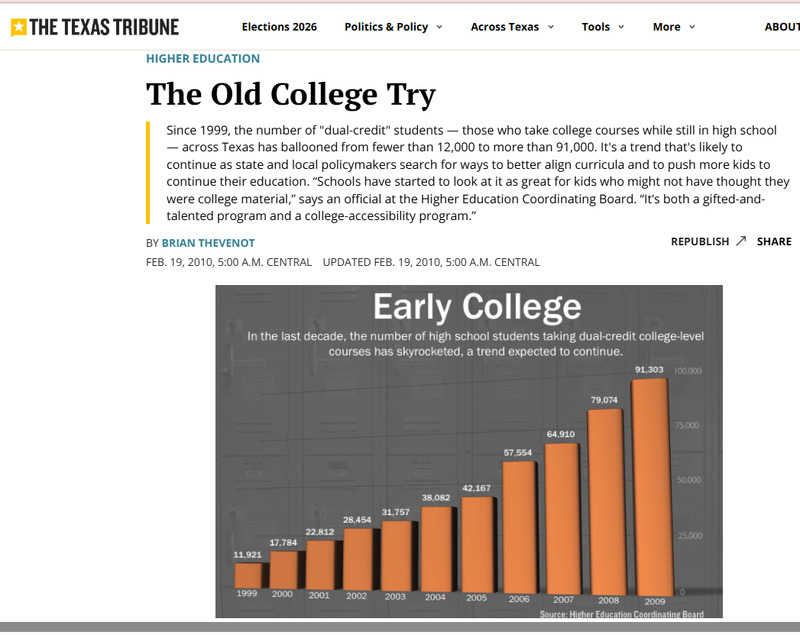
A February 2010 article by Brian Thevenot, published in The Texas Tribune, titled "The Old College Try," examines the rapid growth of dual-credit enrollment throughout the state. The article reports that dual-credit enrollment increased from fewer than 12,000 students in 1999 to more than 91,000 students in 2009. This growth reflected a changing approach to college access. Students no longer had to wait until high school graduation to begin participating in higher education. The article describes how dual-credit programs allowed students to earn both high school and college credit while experiencing the academic expectations of a college environment.
One particularly important aspect of the article is its discussion of changing student demographics. In 1999, approximately 71 percent of dual-credit students were Anglo, while Hispanic students represented approximately 22 percent. By 2009, Anglo enrollment had decreased to 48 percent, while Hispanic enrollment had increased to 39 percent. These figures suggest that dual credit was reaching a broader population of students than it had when the programs initially expanded. However, the article also raises important concerns about program quality, academic rigor, and long-term outcomes.
For example, policymakers questioned whether all dual-credit courses maintained consistent college-level expectations and whether participation actually improved students' likelihood of completing a college degree. This is particularly significant because access to college coursework and readiness for college coursework are not necessarily the same thing. The article demonstrates that Texas was expanding opportunities for students while still working to understand whether those opportunities were producing meaningful long-term academic outcomes. This historical development is especially relevant to early college high schools, which seek to combine college access, academic rigor, and structured student support.
2021: The implementation of TSIA2
The next major development in the history of Texas college readiness occurred on January 11, 2021, when the Texas Success Initiative Assessment 2.0, or TSIA2, replaced the original TSI Assessment. The updated assessment included revised English Language Arts and Reading and mathematics components. The purpose of TSIA2 was to provide a more current assessment framework for determining whether students possessed the academic skills necessary to enroll in entry-level college coursework. The assessment also provides diagnostic information that can help institutions identify areas where students may need additional academic support.
An important distinction is that TSIA2 did not replace the Texas Success Initiative itself. It replaced the earlier assessment instrument within the broader TSI framework. The overall purpose remained consistent: identify students who are not yet meeting college readiness benchmarks and provide appropriate academic support. The continued use of assessment benchmarks demonstrates how central standardized testing has remained in Texas higher education policy. However, the implementation of TSIA2 also reinforces the importance of preparing students before they enter college. For high schools, this means that mathematics and English preparation must be intentional, aligned with college expectations, and supported by opportunities for students to address learning gaps before graduation. When examining these historical artifacts together, several important patterns emerge.
First, Texas gradually moved from an approach centered on identifying academic deficiencies toward a broader understanding of college readiness. TASP emphasized measuring academic skills. TSI expanded the framework by requiring institutions to provide academic advising and developmental support. The College and Career Readiness Standards established expectations for what students should know before entering college. Meanwhile, the expansion of dual-credit programs created opportunities for students to experience college-level coursework before graduating from high school. Finally, TSIA2 modernized the assessment process while maintaining the state's commitment to measuring readiness through academic benchmarks. Despite these developments, one important issue has remained consistent: students do not enter college with equal levels of academic preparation or access to educational resources. The historical sources demonstrate that Texas has repeatedly attempted to improve college readiness through assessment, curriculum standards, institutional support, and expanded access. Yet the continued challenges documented in 2012, particularly the differences between assessment performance and participation in college coursework, suggest that policy changes alone cannot guarantee student success. College readiness must be understood as an ongoing process rather than a single assessment outcome.
References
The Associated Press. (2008, September 24). State aims to reduce number of unprepared college students. The Brownsville Herald. UTRGV Library Archives.
The Del Mar College Foghorn. (1998, September 28). TASP deemed unfair: Students meeting with state officials to fight test. The Del Mar College Foghorn, 64(5), 1. The Portal to Texas History. https://texashistory.unt.edu/ark:/67531/metapth1833826/m1/1/
The Foghorn (Corpus Christi, Tex.), Vol. 53, No. 25, Ed. 1 Wednesday, March 16, 1988, newspaper, March 16, 1988; Corpus Christi, Texas. (https://texashistory.unt.edu/ark:/67531/metapth1833329/m1/3/?q=the%20foghorn%20march%201988), University of North Texas Libraries, The Portal to Texas History, https://texashistory.unt.edu; crediting Del Mar College.
KXAS-TV (Television station : Fort Worth, Tex.). [News Clip: TASP testing], video, January 25, 1989; Fort Worth, Texas. (https://texashistory.unt.edu/ark:/67531/metadc983258/), University of North Texas Libraries, The Portal to Texas History, https://texashistory.unt.edu; crediting UNT Libraries Special Collections.
Lose, J. (1991, September 27). Developmental programs focus on anxiety, time management: Academic center offers courses, support. The Battalion, p. 2. Texas A&M University Libraries. https://newspaper.library.tamu.edu/lccn/sn86088544/1991-09-27/ed-1/seq-2/
Martinez, J. R. (1998, September 8). Registration decline: Students finding TASP test a snag. The Del Mar College Foghorn, 64(2), 1. The Portal to Texas History. https://texashistory.unt.edu/ark:/67531/metapth1833823/m1/1/
The North Texas Daily. (1989, April 21). The North Texas Daily, 72(105). The Portal to Texas History, University of North Texas Libraries. https://texashistory.unt.edu/ark:/67531/metapth723902/
San Antonio College. (1988, February 5). The Ranger (Vol. 63, No. 14). The Portal to Texas History, University of North Texas Libraries. https://texashistory.unt.edu/ark:/67531/metapth1351978/
Senate Bill 286, 78th Leg., Reg. Sess. (Tex. 2003). https://capitol.texas.gov/tlodocs/78R/billtext/pdf/SB00286F.pdf
The Tiger. (1990, October 26). [TASP questions and answers]. The Tiger, 31(3), 4. St. Philip's College. The Portal to Texas History. https://texashistory.unt.edu/ark:/67531/metapth651922/m1/4/
Texas A&M International University. (2002, November 8). Texas Academic Skills Program (TASP). https://www.tamiu.edu/catalog/new/taspreq.htm
Texas Education Agency. Texas Education Today, Volume 20, Number 4, August 2007, periodical, August 2007; Austin, Texas. (https://texashistory.unt.edu/ark:/67531/metapth1906600/m1/4/?q=Texas%20Success%20Initiative%20Assessment%202.0), University of North Texas Libraries, The Portal to Texas History, https://texashistory.unt.edu; crediting UNT Libraries Government Documents Department.
Texas Legislature. (1987). House Bill 2182, 70th Legislature, Regular Session, Chapter 807. Texas Legislative Reference Library. https://www.lrl.texas.gov/legis/billSearch/BillDetails.cfm?legSession=70-0&billtypeDetail=HB&billNumberDetail=2182&billSuffixDetail=
Texas Sunset Advisory Commission. (2003, July). Summary of legislation: 78th Legislature—Texas Higher Education Coordinating Board. https://senate.texas.gov/cmtes/81/c560/0819-SusanSherman.pdf
Thevenot, B. (2010, February 19). The old college try. The Texas Tribune. https://www.texastribune.org/2010/02/19/dual-credit-classes-in-high-school-on-the-rise/
Unknown. (1992, April 7–8). Students using reading lab computers [Photograph]. Palo Alto College Photographic Collection, The Portal to Texas History, University of North Texas Libraries. https://texashistory.unt.edu/ark:/67531/metapth1386471/
Watkins, B. B. (1996). A study of factors on the performance of the Texas Academic Skills Program Test [Master's thesis, University of Texas-Pan American]. ScholarWorks @ UTRGV. https://scholarworks.utrgv.edu/leg_etd/33