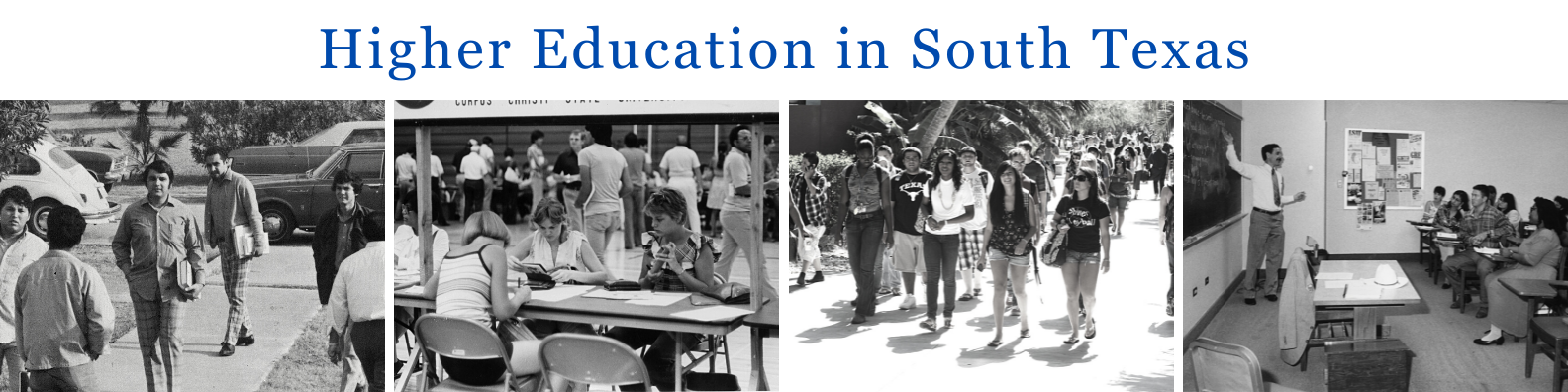
The Evolution of Dual Enrollment in South Texas, 1982–2015
By Sarah Salazar
About This Exhibit
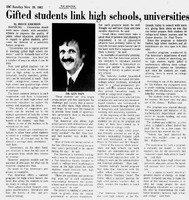
This digital exhibit traces the development of dual enrollment in South Texas by examining archival evidence of how high schools, colleges, policymakers, and community leaders gradually reshaped the boundary between secondary and postsecondary education. The exhibit begins in 1982 because that is the earliest archival evidence I located that clearly documents a recognizable form of concurrent or dual enrollment in the region: a Monitor article describing Pan American University’s partnerships with local high schools to provide academically advanced students with college-level coursework and credit. I do not treat 1982 as the absolute beginning of dual enrollment in South Texas, but rather as the earliest point in the archival record uncovered for this project where the practice becomes visible and identifiable. From there, the exhibit follows how these opportunities expanded and changed in purpose; from selective acceleration for gifted students, to broader efforts centered on access, affordability, college readiness, dropout recovery, and eventually credential and degree attainment. This history matters because dual enrollment is now deeply embedded in the educational landscape of South Texas, yet its current form is the result of decades of institutional partnerships, policy decisions, community priorities, and evolving definitions of student success. Examining that development helps reveal not only how dual enrollment grew, but also how ideas about who should have access to college-level opportunities—and what those opportunities should accomplish—changed over time.
Mapping Dual Enrollment Across South Texas
South Texas covers a large geographic region, and the communities represented in this exhibit vary considerably in size, resources, and proximity to institutions of higher education. This map situates the archival evidence geographically, showing how dual-enrollment development connected universities, community colleges, school districts, and rural communities across the Rio Grande Valley. The locations also demonstrate why partnerships, transportation, technology, and access to qualified instructors became important parts of the region’s dual-enrollment history.
1. Early Experiments in Acceleration, 1982–1983
Taken together, the 1982 and 1983 Monitor articles reveal an early stage in the development of dual enrollment in South Texas, when high school–college partnerships were still largely understood as opportunities for academically advanced students. Pan American University was experimenting with ways to blur the traditional boundary between secondary and higher education by allowing selected students to experience college-level coursework before graduation. Yet these opportunities were not framed as broad access initiatives. Instead, the language of “gifted,” “honors,” and “top” students reflects a model based on academic distinction and readiness. These early programs therefore illustrate both change and continuity: institutions were beginning to reconsider when college learning could begin, while access remained concentrated among students already identified as capable of advanced work. This selective model provides an important starting point for understanding how the purpose of dual enrollment would later expand beyond enrichment and acceleration toward broader goals of college access, affordability, and educational equity.

2. From Acceleration to Access: Reframing College Credit, 1988
The 1988 Report of the Legislative Joint Committee on Higher Education in South Texas marks an important shift in the developing history of dual enrollment. While the early 1980s articles emphasized college coursework for students already identified as gifted or academically advanced, the committee examined higher education within a much broader regional context of unequal resources, low educational attainment, economic disadvantage, and limited access for Hispanic students. Among its recommendations was the creation of “Bridge Programs” that would allow minority high school students to earn college credit, demonstrate their academic potential for admission, and receive encouragement to continue their education. This represents both change and continuity. College credit remained a way for students to begin higher education before completing high school, but its purpose was being expanded beyond acceleration alone. By 1988, policymakers were also considering early college credit as a tool for addressing barriers to higher education and widening opportunity for students historically underserved by the existing system.
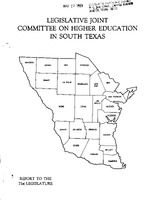
Legislative Joint Committee on Higher Education in South Texas
This exhibit draws specifically from the report’s discussion of unequal higher education access in South Texas and barriers facing Hispanic and low-income students (pp. 79–82), along with the “Bridge Programs” recommendation on page 92. That proposal called for minority high school students to earn college credit and demonstrate academic potential for admission, showing how early college coursework was beginning to be framed as both an access strategy and an opportunity for academic advancement.
3. From Policy to Practice: Concurrent Enrollment Takes Root, 1993
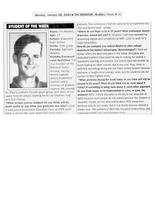
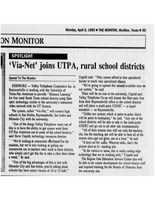
By 1993, concurrent enrollment was becoming visible not only in institutional planning but in the experiences of South Texas students themselves. A series of Monitor “Student of the Week” profiles featured Sharyland High School seniors who identified concurrent enrollment courses at the University of Texas–Pan American as some of the most useful experiences of their high school careers. Students described the courses as providing exposure to college expectations, preparation for future study, and an early understanding of what postsecondary education would require. At the same time, UTPA and Valley Telephone Cooperative were developing “Via-Net,” a fiber-optic distance-learning network intended to connect the university with rural South Texas school districts. University officials identified concurrent enrollment as one potential use of the system, demonstrating how institutions were beginning to consider technology as a way to overcome geographic and staffing barriers. Together, these sources capture an important transitional moment: the access concerns articulated in the late 1980s were beginning to take practical form, even before the more formalized dual-enrollment systems of the late 1990s and early 2000s.
4. Building the Infrastructure: From Local Ideas to Regional Systems, 1997–2003
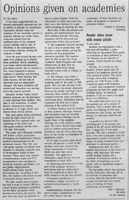
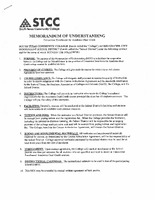
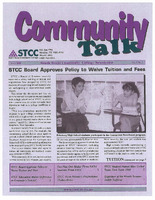
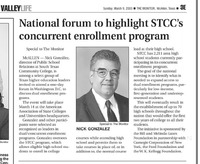
By the late 1990s and early 2000s, dual enrollment in South Texas was moving beyond isolated opportunities and becoming a more formal system built through policy, partnerships, and institutional coordination. The 1997 Monitor opinion piece shows that concurrent enrollment was already part of local conversations about creating more flexible academic pathways for high school students. By 2000, those ideas were taking institutional form. The agreement between South Texas Community College and Rio Grande City ISD defined responsibilities for courses, instructors, facilities, enrollment, and costs, while STCC’s decision to waive tuition and fees removed an important financial barrier to participation. By 2003, the college was serving more than 2,000 high school students and receiving national attention for a model increasingly connected to expanding opportunity for low-income, first-generation, and underrepresented students. Together, these artifacts show that the growth of dual enrollment depended not simply on offering college courses, but on building the relationships, structures, and processes necessary to make those opportunities accessible on a much larger scale.
5. Access and Acceleration Converge, 2005–2011
Between 2005 and 2011, dual enrollment in South Texas entered a period of rapid expansion and changing purpose. Earning college credit while still in high school continued to provide students with an academic head start, but acceleration was increasingly connected to broader goals of college access, affordability, readiness, and completion. Institutions across the Rio Grande Valley developed larger dual enrollment programs, created early college high schools, strengthened partnerships between school districts and colleges, and promoted college-level coursework as a pathway for students who historically faced barriers to higher education. During this period, access and acceleration were no longer separate goals. Instead, institutions increasingly used accelerated college opportunities as a strategy for widening participation and building a stronger college-going culture across the region.
A. Expanding Opportunity, 2005–2006
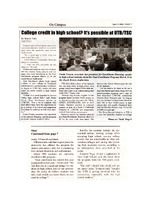
By 2005, dual enrollment at UTB/TSC was growing beyond the smaller, selective opportunities visible in the earlier archival record. Newspaper and institutional publications emphasized the ability of students to earn transferable college credit, save money, experience college-level expectations, and begin preparing for higher education before graduating from high school. By Fall 2006, UTB/TSC described a program that had expanded dramatically across area school districts and presented dual enrollment as a way to help “close the gap.” These sources show an important shift in emphasis: earning college credit early remained a form of acceleration, but institutions were increasingly describing that opportunity in terms of affordability, preparation, and expanding students’ pathways into higher education.

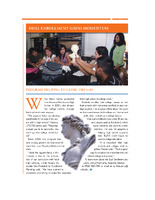
Dual Enrollment Gains Momentum: Program Helping to Close the Gap
This Fall 2006 UTB/TSC article captures the rapid growth of dual enrollment across the Rio Grande Valley. It emphasizes low-cost college credit, stronger high school–college coordination, and preparation for postsecondary success, showing how dual enrollment was increasingly framed as a way to expand opportunity and help “close the gap.”
B. Early College Takes Shape, 2007–2008
The emergence of Early College High Schools marked another significant change in the relationship between access and acceleration. Rather than simply allowing individual students to take a college course, the early-college model built college coursework into the structure of the high school experience itself. Brownsville ISD’s partnership with UTB/TSC illustrates this transformation. Brownsville Early College High School was designed to improve graduation and college readiness while allowing students to earn substantial college credit—and potentially an associate degree—alongside their high school diploma. The partnership also demonstrates the growing complexity of dual enrollment: school districts, colleges, state agencies, foundations, administrators, and community organizations all contributed to creating and sustaining these new pathways. Acceleration was increasingly being used not simply to reward students already ahead, but as a deliberate strategy for helping more students reach college.



C. From Local Programs to a Regional Strategy, 2009–2011
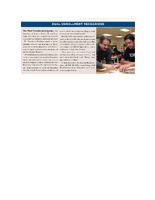
By the end of the decade, dual enrollment was being discussed not only as an institutional program but as a broader strategy for educational improvement in South Texas. Congressman Rubén Hinojosa’s 2009 remarks highlighted the rapid growth of South Texas College’s school-district partnerships and connected dual enrollment and early college to dropout recovery, graduation, and expanded opportunity for Hispanic and low-income students. UTPA’s concurrent enrollment materials further demonstrate that high school–college pathways had become an established part of the region’s higher education landscape. Together, these artifacts show dual enrollment becoming embedded within a larger regional effort to connect students to college earlier, reduce traditional barriers between high school and higher education, and redefine what college access could look like in South Texas.
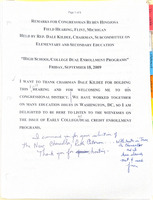
Remarks for Congressman Rubén Hinojosa: High School/College Dual Enrollment Programs
In these 2009 congressional remarks, Rubén Hinojosa presented South Texas as a model for the expanding use of dual enrollment and early college. He highlighted South Texas College’s rapid growth, partnerships with area school districts, and PSJA initiatives that connected college credit to dropout recovery, high school completion, and expanded opportunity for Hispanic and low-income students. The speech is significant because it shows dual enrollment being framed by a political leader not simply as academic acceleration, but as a regional strategy for addressing educational inequality and strengthening pathways into higher education.
6. From Courses to Credentials: Institutionalizing Completion, 2014–2015
By 2014 and 2015, dual enrollment at South Texas College had developed into a highly structured regional system focused increasingly on college completion. The institution’s annual reports describe coordinated partnerships, dedicated administrative structures, early college high schools, dual enrollment academies, workforce certificates, and pathways leading from high school coursework to certificates and associate degrees. Success was also being measured in new ways: not simply by whether students had access to a college course, but by the number of credits earned, credentials completed, degrees awarded, and students successfully transitioning into higher education. This represents an important point in the historical development of dual enrollment in South Texas. The earlier goals of access, affordability, and college readiness remained present, but they were now joined by a stronger emphasis on acceleration and measurable credential attainment. By this period, dual enrollment had become not only a bridge to college, but a system designed to move students substantially into—and in some cases through—college before high school graduation.

Then → Transition → More Recent
How the Language and Purpose of Dual Enrollment Changed
Across the archival record, the language used to describe dual enrollment reveals a shift in purpose. What changed was not simply the availability of college credit, but the meanings and expectations attached to it over time.
THEN: Selective Acceleration
“Gifted Students Link High Schools, Universities”
Early concurrent enrollment was framed primarily as an opportunity for students already considered academically advanced.
- Gifted and honors students
- Academic enrichment
- Early acceleration
- Selective opportunity
- Academic distinction
TRANSITION: Access and Acceleration Converge
“Helping to Close the Gap”
“Latino access, retention, and success”
Dual enrollment was increasingly presented as more than a way to get ahead. College credit became connected to broader goals of educational opportunity.
- College readiness
- Affordability
- Expanded access
- Dropout recovery
- Opportunity for underserved students
MORE RECENT: Structured Pathways and Completion
“Pathway to College Completion”
By the mid-2010s, dual enrollment had become a highly organized regional system, with success increasingly measured through academic progress and credential attainment.
- Structured college pathways
- Stackable credentials
- Certificates
- Associate degrees
- Transfer and completion
Change and continuity: Access did not disappear as acceleration and credential attainment became more prominent. Instead, these purposes became layered together. Across each period, high school–college partnerships remained central to expanding educational opportunity in South Texas.
What Should Count as Success?
The history traced in this exhibit shows that dual enrollment in South Texas did not develop around a single purpose. In the early 1980s, college coursework was largely presented as enrichment and acceleration for students already identified as gifted or academically advanced. By 1988, however, the Legislative Joint Committee on Higher Education in South Texas was discussing college credit through “Bridge Programs” as one possible response to persistent inequalities in college access for minority students. During the late 1990s and early 2000s, those ideas became institutional structures: high schools and colleges formalized partnerships, tuition barriers were reduced, and dual enrollment expanded across the region. By the mid-2000s, access and acceleration increasingly converged as early college high schools and other programs used substantial college-credit accumulation not simply to help students “get ahead,” but to strengthen college readiness, reduce costs, address dropout concerns, and connect historically underserved students to higher education. By 2014 and 2015, the system had become highly organized, and success was increasingly expressed through measurable outcomes such as credit hours, certificates, associate degrees, transfer, and completion.
Yet an important continuity runs through this history: South Texas educators, institutions, policymakers, and communities repeatedly turned to high school–college partnerships as a way to expand educational opportunity. What changed was not the continuing concern with access, but the way success came to be defined. The earlier emphasis on opening doors increasingly existed alongside—and sometimes became overshadowed by—expectations for faster credit accumulation and credential completion. This history therefore complicates any attempt to measure dual enrollment success by participation or credentials alone. Labaree’s tension between educational access and individual advantage, Squire and Liu’s attention to how policy produces and distributes opportunity, and Weaver-Hightower’s emphasis on the actors, relationships, structures, and processes surrounding policy all remind us that expansion is not automatically the same as equity. For contemporary educational leaders, the history of dual enrollment in South Texas raises a continuing question: not simply how many students can earn college credit before high school graduation, but whether the systems built around those opportunities provide meaningful access, appropriate support, and lasting educational opportunity for the students and communities they were intended to serve.
Sources & References
Primary and Archival Sources
Brownsville Independent School District. (2008, October 9). Brownsville Early College High School grand opening ceremony [Brochure].
Dual enrollment gains momentum: Program helping to close the gap. (2006, Fall). Orange & White. University of Texas at Brownsville/Texas Southmost College.
Dual enrollment recognized. (2008, Winter). Orange & White, p. 3. University of Texas at Brownsville/Texas Southmost College.
Erickson, B. (1982, November 28). Gifted students link high schools, universities. The Monitor, p. 12C.
Hinojosa, R. (2009, September 18). Remarks for Congressman Rubén Hinojosa: Field hearing, Flint, Michigan, “High School/College Dual Enrollment Programs” [Speech manuscript]. Rubén Hinojosa Congressional Papers (ELIBR-0146, Box 79 of 226), University of Texas–Rio Grande Valley University Library, Edinburg, TX.
Legislative Joint Committee on Higher Education in South Texas. (1988). Report to the 71st Legislature. Texas Legislature.
Long, G. (2007, December 11). BISD moves forward on “Early College” campus. The Brownsville Herald.
Lopez, I. (2005, August 29). High school students get a head start on college. The Collegian, 58(2), 1, 12.
National forum to highlight STCC’s concurrent enrollment program. (2003, March 9). The Monitor, p. 3E.
South Texas College. (2014, December 17). Dual enrollment program: 2014 report [Program report]. Student Affairs & Enrollment Management and Academic Affairs.
South Texas College. (2015, December 1). Dual enrollment program: 2015 report [Program report]. Student Affairs & Enrollment Management and Academic Affairs.
South Texas Community College. (2000, May). STCC board approves policy to waive tuition and fees. Community Talk: South Texas Community College Newsletter, 5(5), 1, 7.
South Texas Community College, & Rio Grande City Independent School District. (2000, May). Memorandum of understanding: Concurrent enrollment for academic dual credit [Memorandum of understanding].
Top high school students earning college credits. (1983, June 28). The Monitor.
University of Texas at Brownsville/Texas Southmost College. (2008, August 27). UTB/TSC alumna becomes first principal of new Brownsville school [News release].
University of Texas–Pan American. (2009, February 18). Concurrent enrollment update [Video]. UTPA Archives–Media, UTRGV Digital Library. https://scholarworks.utrgv.edu/utpamedia/118/
University of Texas–Pan American. (2011, November 30). UTPA News—Concurrent enrollment (English) [Video]. UTPA Archives–Media, UTRGV Digital Library. https://scholarworks.utrgv.edu/utpamedia/119/
Valle, B. (2005, April 4). College credit in high school? It’s possible at UTB/TSC. The Collegian, 57(26), 7, 9.
Zaremba, C. S. (1997, December 17). Opinions given on academies [Letter to the editor]. The Monitor, p. 17.
Historical and Scholarly Sources
Carales, V. D., & Doran, E. E. (2022). The pursuit of equal educational opportunity: A historical analysis of the South Texas/Border Initiative. Educational Policy, 36(5), 1162–1187. https://doi.org/10.1177/0895904820951128
Howley, A., Howley, M. D., Howley, C. B., & Duncan, T. (2013). Early college and dual enrollment challenges: Inroads and impediments to access. Journal of Advanced Academics, 24(2), 77–107. https://doi.org/10.1177/1932202X13476289
Labaree, D. F. (2017). A perfect mess: The unlikely ascendancy of American higher education. University of Chicago Press.
Martinez, M. A., Valle, F., Cortez, L. J., Ponjuan, L., & Sáenz, V. B. (2018). Context is key: School leaders’ approaches in creating and maintaining dual enrollment opportunities in South Texas. Leadership and Policy in Schools, 17(4), 516–540. https://doi.org/10.1080/15700763.2017.1326149
Rutkauskas, C., & Grant, K. (2023). Formative threads in the tapestry of college credit in high school: An early history of the development of concurrent enrollment and a case study of the country’s oldest program. Concurrent Enrollment Review, 1, Article 3. https://doi.org/10.14305/jn.29945720.2023.1.1.01
Squire, D., & Liu, P. (2022). Learning from the past to create an equitable future: An archival study of a university emerging as a Hispanic-serving institution. About Campus, 27(1), 20–30. https://doi.org/10.1177/10864822221102956
Weaver-Hightower, M. B. (2008). An ecology metaphor for educational policy analysis: A call to complexity. Educational Researcher, 37(3), 153–167. https://doi.org/10.3102/0013189X08318050