-
 The Battalion. (College Station, Tex.) 1893-current, September 27, 1991, Image 2
This newspaper article examines developmental education and academic support programs at Texas A&M University in the early years of the Texas Academic Skills Program (TASP). It describes services offered through the university’s Center for Academic Enhancement (CAE), including developmental instruction in reading, mathematics, and writing, as well as assistance with time management, test anxiety, note-taking, and study strategies. The article illustrates how institutions responded to TASP by providing academic interventions intended to help students strengthen their skills and meet statewide assessment requirements.
-
 Texas Academic Skills Program (TASP)
Historical webpage from Texas A&M International University outlining the policies and requirements of the Texas Academic Skills Program (TASP). The page explains that TASP was mandated by the State of Texas in 1987 and implemented for students entering public institutions of higher education beginning in Fall 1989. It describes the assessment of reading, mathematics, and writing skills and explains how test results affected students' enrollment eligibility, developmental education requirements, and progression through college-level coursework. The webpage also documents the implementation of additional testing requirements beginning in Fall 1998, including the requirement that undergraduate students complete assessment before enrolling in collegiate-level courses. Particularly significant are the university's explanations of the 60-semester-credit-hour restriction, mandatory developmental instruction, limitations on enrollment in courses related to unpassed TASP sections, and exemptions based on prior academic achievement. This resource illustrates how statewide college readiness policy was translated into institutional practices governing student access and academic progression.
-
 Dual Enrollment Program: 2015 Report
Institutional report documenting the continued expansion and formalization of South Texas College’s dual enrollment program. By 2015, the program served more than 15,000 students across 23 school districts and emphasized college readiness, early college high schools, workforce certificates, associate degrees, and pathways from high school coursework to college completion.
-
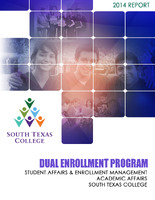 Dual Enrollment Program: 2014 Report
Institutional report documenting the growth, structure, and outcomes of South Texas College’s dual enrollment program. It traces expansion from 8 students in 1997 to more than 12,500 in 2014 and highlights tuition waivers, early college high schools, dual enrollment academies, college-completion pathways, and stackable credentials.
-
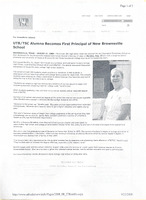 UTB/TSC Alumna Becomes First Principal of New Brownsville School
UTB/TSC news release announcing Roni Louise Renfro as the first principal of Brownsville Early College High School. The article explains that BECHS opened with about 100 freshmen, planned to grow to 400 students, and would allow students to complete college-level dual-credit coursework and graduate with both a high school diploma and an associate degree.
-
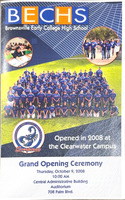 Brownsville Early College High School Grand Opening Ceremony Brochure
Brochure for the 2008 grand opening of Brownsville Early College High School. It describes BECHS as an educational choice school designed to let students earn up to two years of college credit tuition-free while completing a high school diploma, with the broader goals of improving graduation rates and college readiness.
-
 UTPA News - Concurrent Enrollment (English)
UTPA News video focusing on concurrent enrollment and the ways high school students could participate in college-level coursework through the university. The video documents the continued development of high school–college partnerships in South Texas and shows concurrent enrollment as an established pathway connecting secondary students to higher education.
-
Concurrent Enrollment Update
Video documenting the development and purpose of dual enrollment/early college in South Texas. The video can be used to illustrate how institutions presented these programs to students, families, or the broader community and how college access, acceleration, and credential attainment were increasingly connected.
-
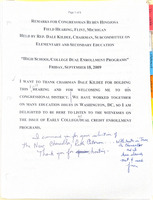 Remarks for Congressman Rubén Hinojosa: High School/College Dual Enrollment Programs
Congressional remarks highlighting the rapid expansion of dual enrollment and early college programs in Texas. Hinojosa uses South Texas College and PSJA ISD as examples of how dual credit was being used to expand college access, support dropout recovery, and create pathways toward associate degrees for Hispanic and low-income students.
-
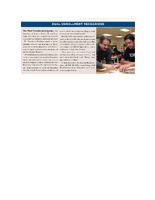 Dual Enrollment Recognized
Institutional article announcing national recognition of UTB/TSC’s dual enrollment program as a finalist for Excelencia in Education’s Example in Excelencia award. The article highlights the program’s role in improving Latino access, retention, and success and notes that more than 6,200 area high school students were enrolled in dual-credit courses.
-
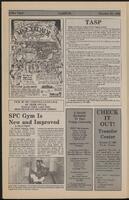 The Tiger (San Antonio, Tex.), Vol. 31, No. 3, Ed. 1 Friday, October 26, 1990
Page 4 of the October 26, 1990 issue of The Tiger, the student newspaper of St. Philip's College in San Antonio, Texas. The page features a question-and-answer section explaining the Texas Academic Skills Program (TASP), including its purpose, testing requirements, eligibility criteria, and consequences for students who did not pass all three sections of the examination. The article explains that TASP was designed to ensure students entering public colleges in Texas possessed the reading, mathematics, and writing skills necessary for college-level coursework. It also describes the Pre-TASP placement examination, mandatory developmental coursework, and remediation requirements. This resource provides direct evidence of how TASP requirements were communicated and implemented at the institutional level during the program's early years.
-
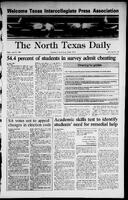 The North Texas Daily (Denton, Tex.), Vol. 72, No. 105, Ed. 1.
Newspaper publication from the University of North Texas documenting higher education during the period surrounding the development and implementation of statewide college readiness assessment in Texas. This resource was identified through a search for coverage of the Texas Academic Skills Program (TASP). It may provide contemporary reporting and institutional perspectives on the relationship between standardized academic assessments, college preparation, and access to higher education.
-
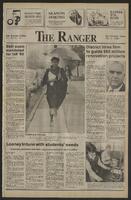 The Ranger, Vol. 63, No. 14, February 5, 1988.
The Ranger, the student newspaper of San Antonio College. This issue documents developments in higher education during a period of changing expectations for college-level academic preparation in Texas. On page 2, an interview with college president Max Castillo discusses the institution's academic competencies and concerns regarding students' reading and writing skills. On page 8, an article examines a nursing program connecting high school and college coursework, including opportunities for students to earn both high school and college credit. Together, these articles provide insight into institutional efforts to strengthen academic preparation, align secondary and postsecondary education, and address student readiness.
-
 BISD Moves Forward on ‘Early College’ Campus
Newspaper article describing Brownsville ISD’s development of an Early College High School in partnership with UTB/TSC. The initiative was designed to allow students to begin college-level coursework in high school and graduate with substantial college credit, showing how dual enrollment in South Texas was evolving into a more structured early-college model.
-
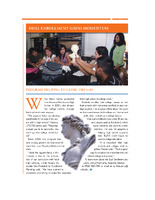 Dual Enrollment Gains Momentum: Program Helping to Close the Gap
Institutional magazine article highlighting the rapid growth of UTB/TSC’s dual enrollment program. The article reports a 1,822 percent enrollment increase since 2000, participation from more than 13 school districts, low-cost college courses, and more than 16,000 college credit hours earned by high school students. It frames dual enrollment as a strategy for easing the transition to college and helping close educational opportunity gaps in South Texas.
-
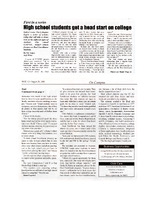 High School Students Get a Head Start on College
Student newspaper article examining UTB/TSC dual enrollment through the experiences of participating high school and college students. The article emphasizes free or low-cost college credit, transferable coursework, academic challenge, and the opportunity to begin college early, showing how dual enrollment was becoming both an acceleration and college-access strategy in South Texas.
-
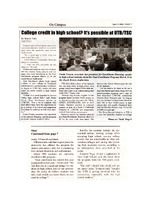 College Credit in High School? It’s Possible at UTB/TSC
Student newspaper article describing the rapid expansion of UTB/TSC’s dual enrollment program. It highlights college-credit opportunities, reduced tuition costs, college-readiness requirements, and the program’s role in encouraging Rio Grande Valley students to pursue higher education. By 2005, approximately 900 students were participating.
-
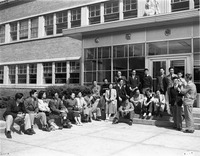 Twenty-Three Japanese University of Michigan Graduate Students Tour Campus, September 1950
Twenty-three Japanese students, largest group from Japan ever to enter the University at one time, pause on the steps of the new Administration Building during a tour of the campus. Charles Arnade (far right), assistant to the director of the University's International Center, leads the tour. He is talking with Akira Ota, a teacher at the University of Tokyo, who has been appointed spokesman for the group. All are graduate students here. Most of them are teachers in Japan. The group may swell to as many as 45, with late arrivals, Arnade said.
-
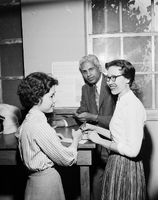 Foreign Exchange students preparing report. Florence LaiDong Fung, Samuel Dayal and Keun Sik Lee
Students Preparing Report - These three foreign students at TCU are filling out report cards for the district office of the Immigration and Naturalization Service in Dallas. Left to right are Florence LaiDong Fung, Samuel Dayal and Keun Sik Lee.
-
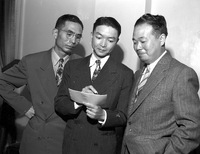 Chinese Exchange Students
Three Chinese students are in the United States to study oil operations. Standing left to right are S. K. Chin, T. M. Wu, and S. P. Wu. After completing their studies, they plan to return to their country to seek new oil reserves. Mr. Chin is dressed in a double-breasted suit. Mr. T. M. Wu is wearing a double-breasted, pinstripe suit and is writing on a piece of paper. Mr. S. P. Wu is dressed in a striped suit.
-
 The Foghorn (Corpus Christi, Tex.), Vol. 53, No. 25, Ed. 1
Page 3 of The Foghorn, the student newspaper of Del Mar College in Corpus Christi, Texas. Published during a significant period in the development of statewide college readiness assessment in Texas, this newspaper page serves as a historical record of campus life, student perspectives, and higher education issues during the late 1980s.
-
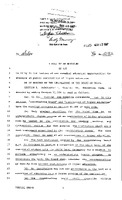 House Bill 2182: Testing and Remedial Education Opportunities for Students at Public Institutions of Higher Education.
House Bill 2182, enacted during the 70th Regular Session of the Texas Legislature in 1987.
-
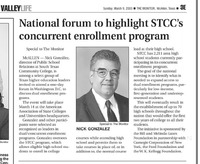 National forum to highlight STCC's concurrent enrollment program
Newspaper article describing South Texas Community College’s concurrent enrollment program and its recognition at a national forum on dual enrollment. The article notes that STCC served 2,211 area high school students and connects program expansion to improving college access for low-income, first-generation, and underrepresented students.
-
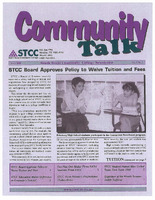 STCC Board Approves Policy to Waive Tuition and Fees
Newsletter article announcing STCC’s policy waiving tuition and registration fees for qualifying students in cooperating school districts who participated in concurrent/dual-credit courses. The policy reduced a major financial barrier and helped expand dual enrollment across the Rio Grande Valley.
-
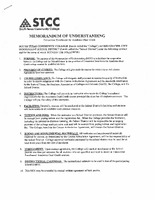 Memorandum of Understanding: Concurrent Enrollment for Academic Dual Credit
Memorandum of Understanding establishing a formal concurrent-enrollment partnership between South Texas Community College and Rio Grande City ISD. The agreement outlines responsibilities for courses, instructors, facilities, tuition and fees, textbooks, enrollment, and instructional standards, showing how dual credit was becoming a structured partnership between high schools and colleges.